Today was the first day of our first brief – to make and wear a design to extend human senses. As part of our preliminary research, we were advised to travel to the Monument to the Great Fire of London and focus particularly on the sense of proprioception – an internal sense of body position and movement. My group is made up of myself, Xiaole, Keyi, Akriti, and Carlotta, but as Carlotta only arrived in London this morning she wasn’t able to come along for the first day of research.
We started by walking around the base of the tower. I had originally planned to go to the viewing platform, but unfortunately this was closed until this Saturday. One thing that we quickly noticed is how much the surroundings of the monument press in around it – from the roads that wind past the tower, the large office buildings that border the square and even the public seating for nearby cafés and pubs, there is not more than a couple of yards of space to walk past the Monument in some places. This got us thinking about ideas of personal space in relation to our own sense of position, and how this qualifies as a combination of external senses, compared to internal senses such as proprioception.

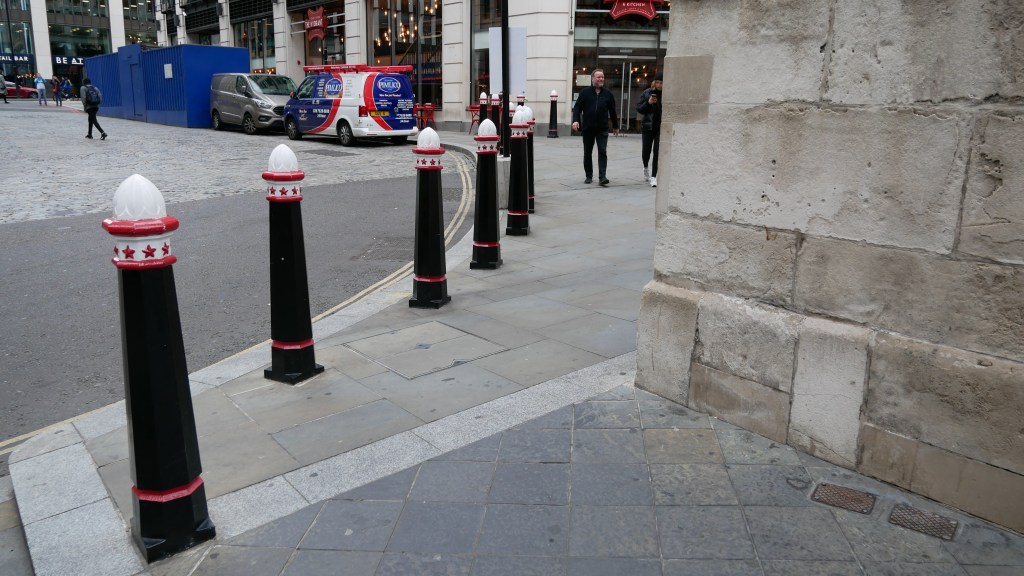
Also at the Monument were some seating blocks that recited the nursery rhyme “London’s Burning”, which I recognised but the rest of the group were unfamiliar with. Keyi suggested a link here to the effects that memory and nostalgia have on our senses, and vice versa, which led us to considering the overarching theme of the relationship between our memory and the way in which we process sensory input.
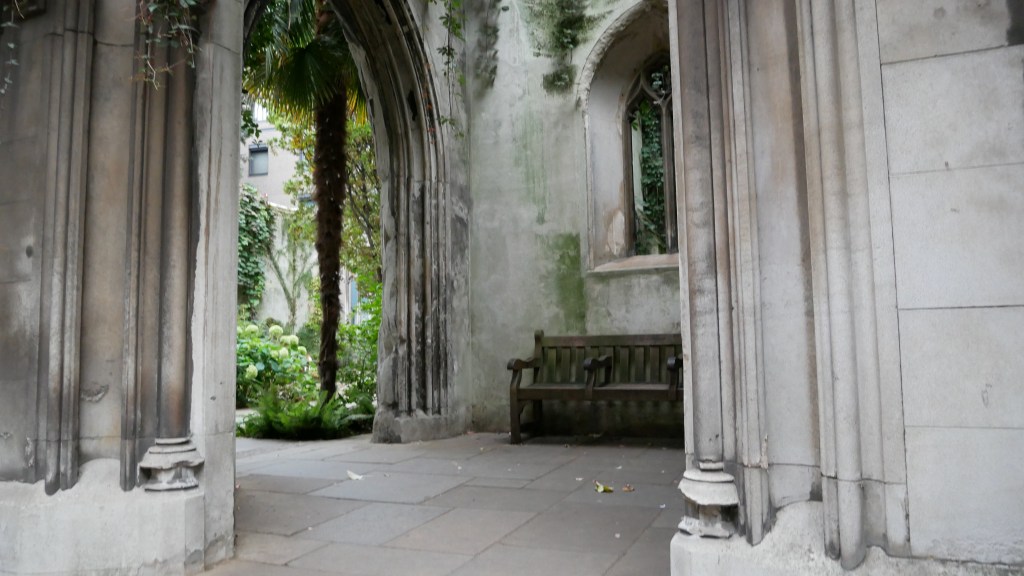
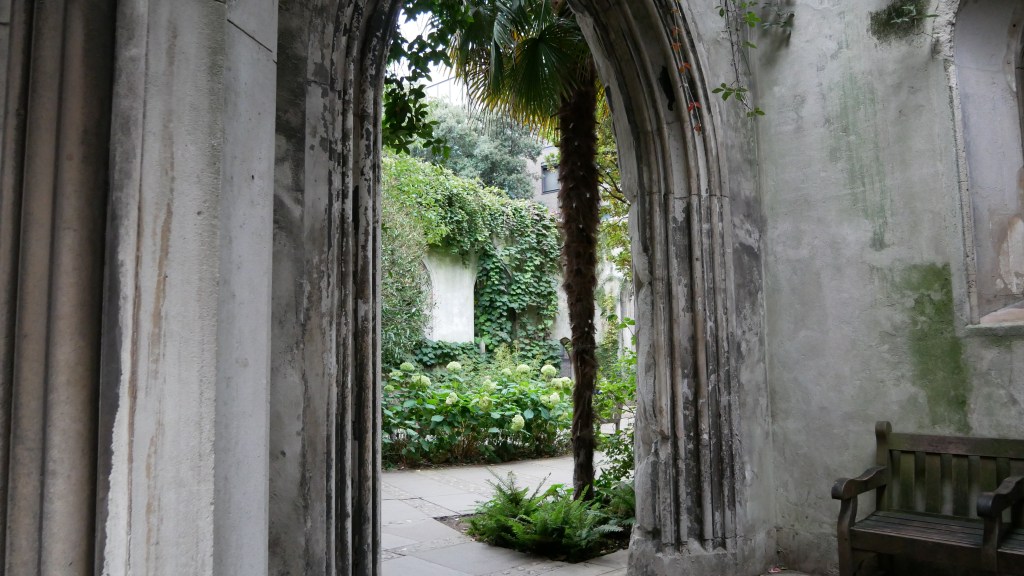
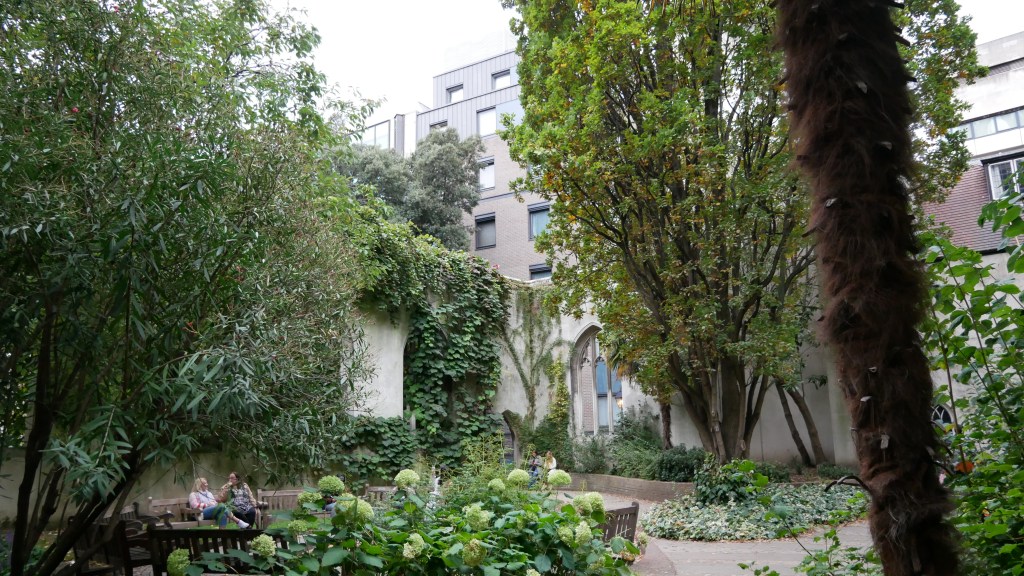
We continued developing these ideas as we moved to St Dunstan in the East, a nearby site that was also mentioned on the brief. While here, we considered the general sense of exteroception, a catch-all term to refer to our detection of external stimuli that can encompass all five ‘traditional’ senses. However, we often found it difficult to draw a clear distinction between these external senses and internal senses, which led us to focus upon the way in which the human brain, upon processing these inputs, tends to jumble many of these stimuli together to the point where they become impossible to distinguish. Again, we considered the roles memory and learned experience play in manipulating what we perceive around us, opening up the possibility of senses as a much more subjective form of input than we had considered.
While at St Dunstan, I also considered the idea of rhythm dictating how we perceive this information, which we considered in the context of drugs and alcohol’s effects on sensory inputs, as well as the way in which we detect things when hurried or relaxed. This tied to Frank Lloyd Wright’s practice in compression and expansion, as well as how this might connect to ideas in music theory of tension and release.
 Harry Solomons