This week, we presented our final prototype for the Human Senses brief – a wearable video screen positioned in your peripheral vision, connected to another screen inside of a shoe box, through which an observer can look over your shoulder.
After the selfie sticks arrived, we constructed a rough version of our prototype by mounting the sticks to a hardback book in a backpack. To experiment with the best angle at which to place our screen, we conducted a rough version of the field peripheral vision test (Turbert, 2022, accessed 18/12/22), by marking out our limits of peripheral vision on the floor in tape (for the absolute limits, we walked around the subject with a torch pointed at them until they could see it; for the limit of precise sight, we walked around with a letter of the alphabet at a fixed size until they could determine what it was).
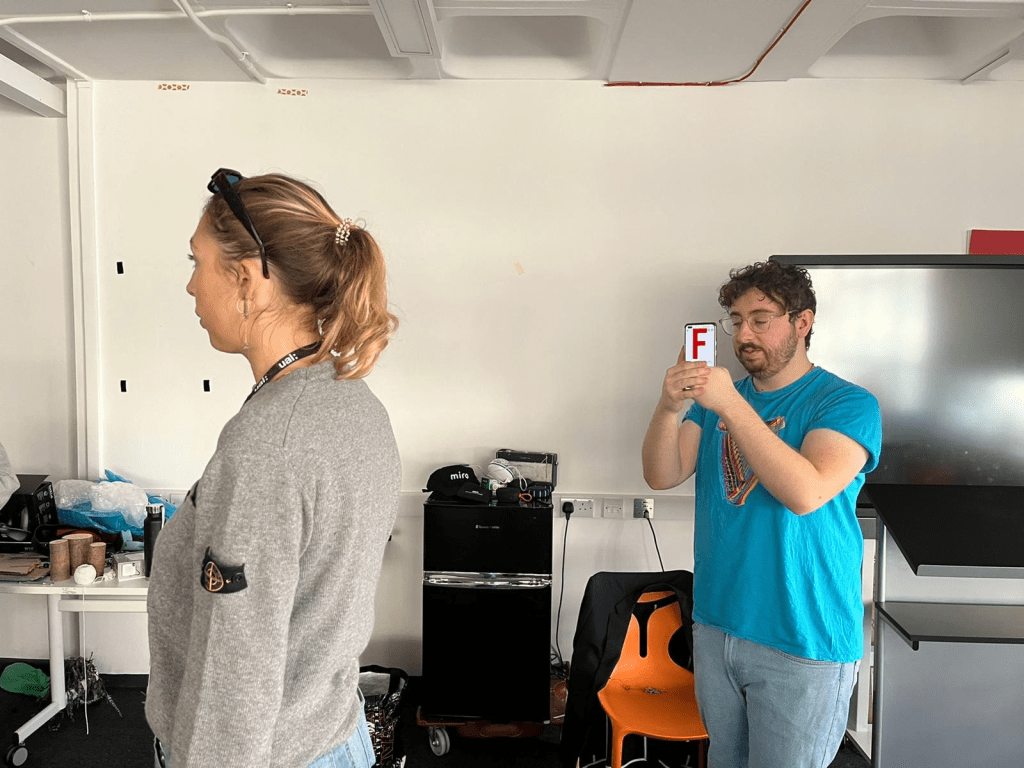


We also created a video of our own eyes to determine the point at which the screen should be positioned. We decided that the best results were achieved at the limit of precise vision – far enough outside of our normal range of sight that it was not easy to determine what was going on, but close enough that the image of eyes was immediately clear.
We also conducted an experiment in which I was sat in D211 wearing the backpack and asked to “do normal person things”, while the rest of the group took the shoe box around the college. It was very clear that I did not know who the people looking at me were, which made it incredibly difficult to do anything like drinking water or reading a book without being incredibly aware of my own body.

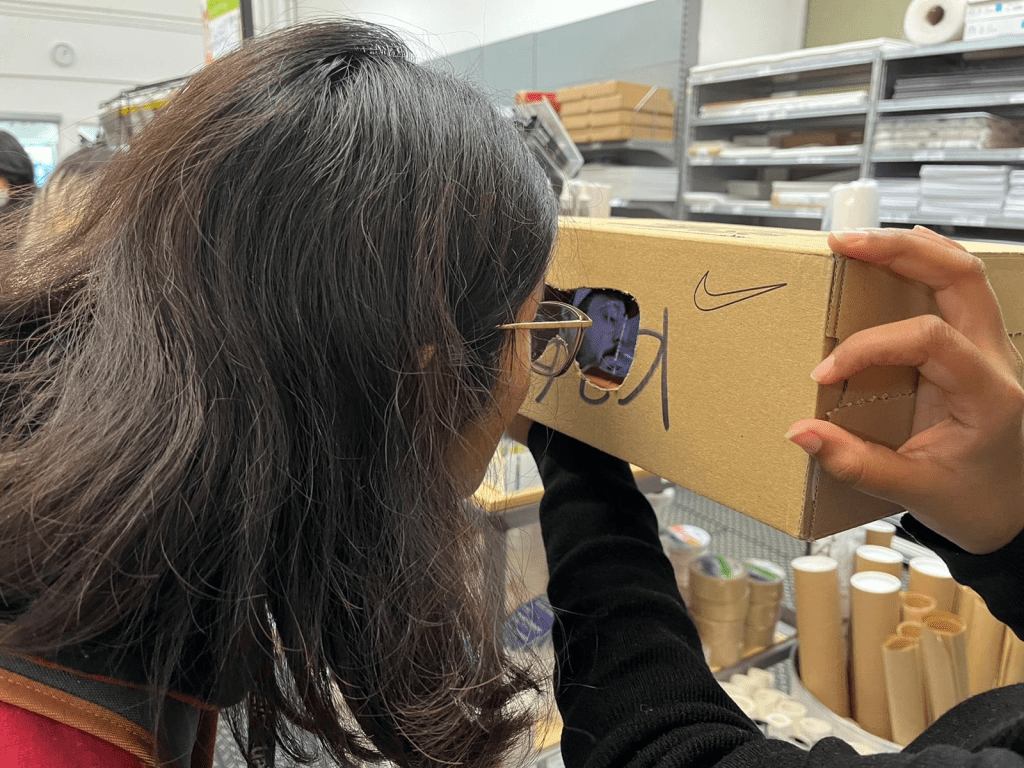
Our presentation, in which we used Manfredi as a volunteer and asked him to eat a Twix while wearing the backpack, got really excellent feedback – multiple people suggested that we intensify the experience by adding additional screens, or by including a different sense such as hearing. One piece of feedback was that we should force the viewer to experience too much information about the subject, such as by hearing them eat in grisly detail. We were also warned that we had drifted quite far away from our original brief of proprioception, but that our results were interesting enough to justify this – this is definitely something to be wary of for future briefs.
 Harry Solomons