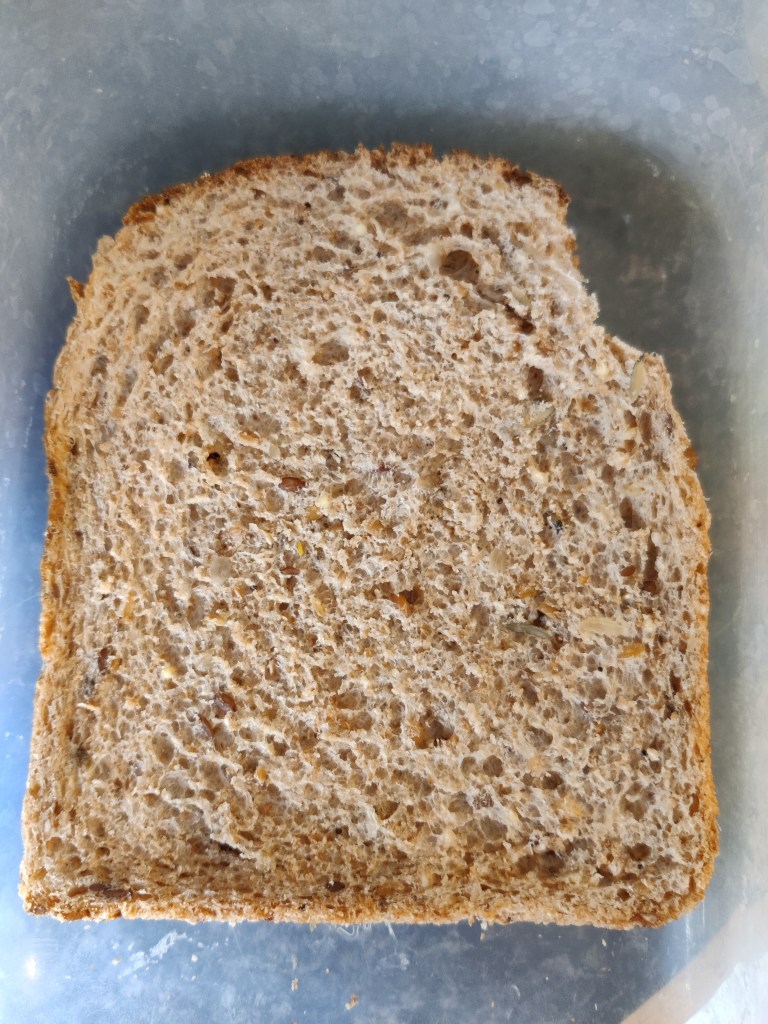
This week, we began our work on the brief: design a way to materialise the qualities of mould. We began with research, finding mould around our environments and reading papers on how they grow, propagate and communicate. I found some mould in my shower, as well as an amount growing on a piece of bread, which I spritzed with water and placed in a tupperware container for several days.
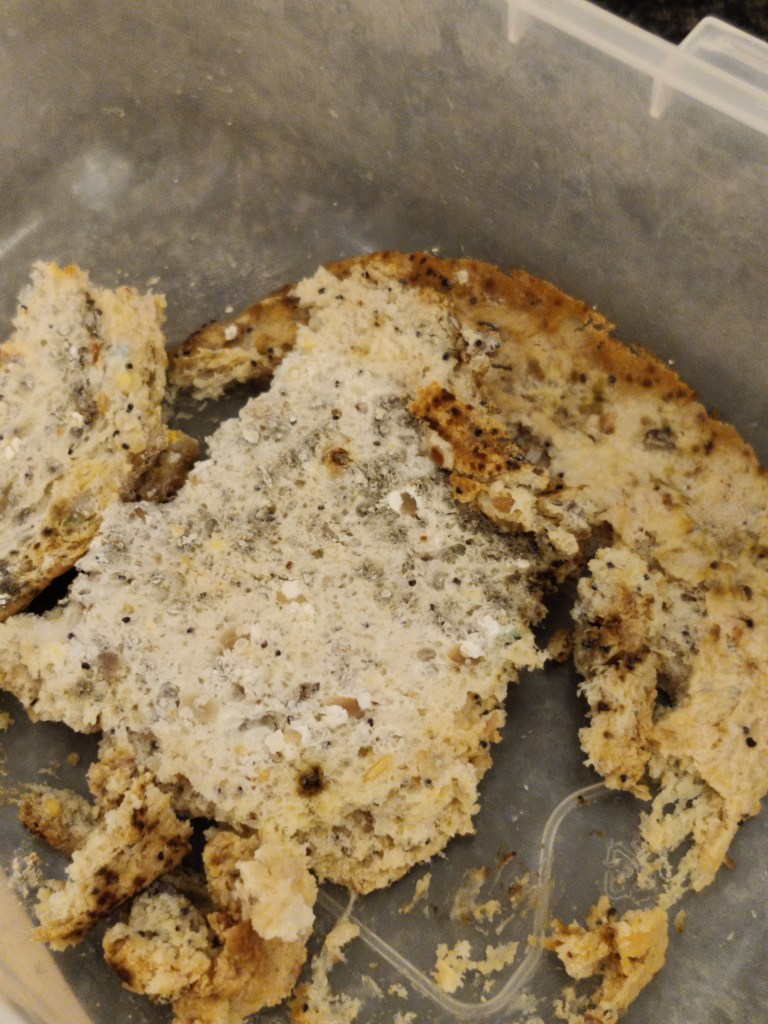
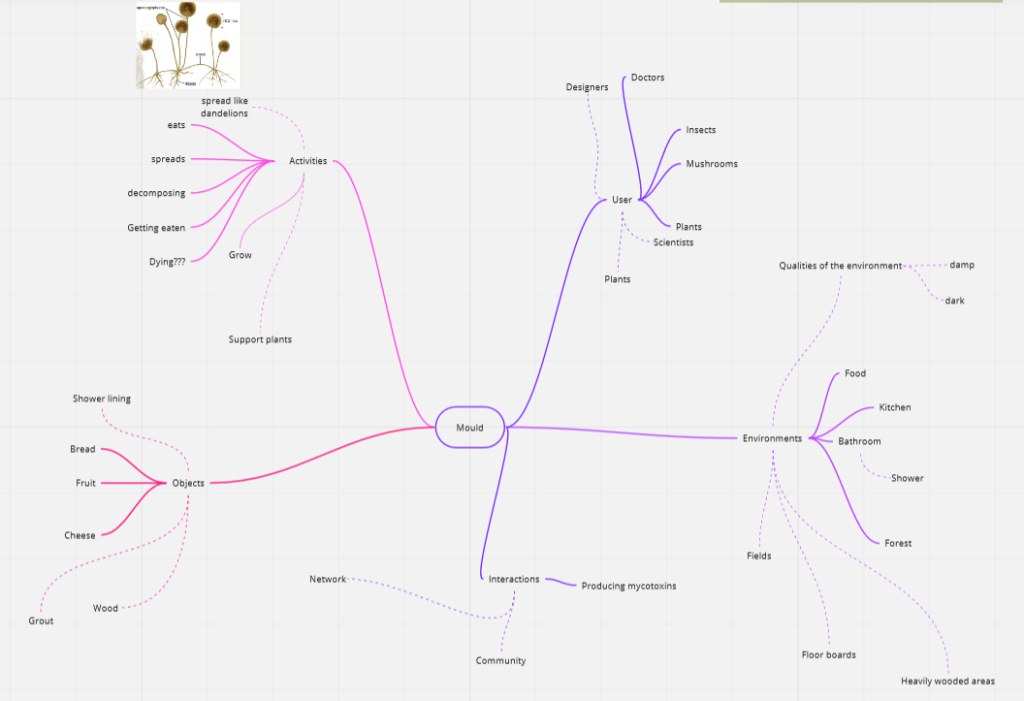
When comparing notes with the rest of the group, we used AEIOU techniques to brainstorm activities, environments, interactions, objects and users associated with mould. In retrospect, as outlined after our tutorial, this was an incorrect approach – AEIOU should have been used to structure and analyse our observations rather than generate ideas. The way in which mould had spread across our foods inspired us to consider its role in decomposition, as well as the formation of networks.
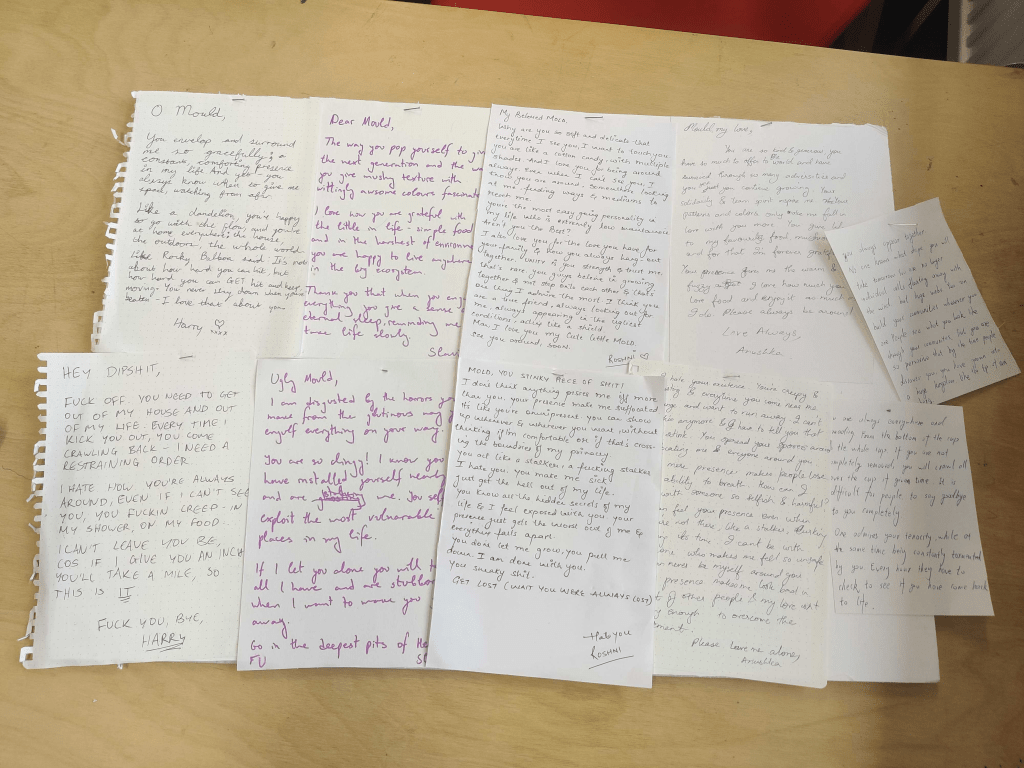
Our next step was to write break-up and love letters to mould, which we did individually. A common theme across the majority of our letters was spreading, which we interpreted as both positive (self-sufficient and almost comforting) as well as negative (ruthless, indestructible and inevitable). We also extracted the key terms of invisibility and resilience, and began to consider how these could be modelled materially.
One idea we had was to use bubbles to emulate mould spores in the air. This, we felt, corresponded well with the random motion of particles in the air, while creating a visually appealing sense of envelopment and an almost suffocating closeness. Our first experiment asked volunteers to sit with their eyes closed, stand up when a bubble landed on them and grab the arms of people nearby to form a mould-like network across the group.

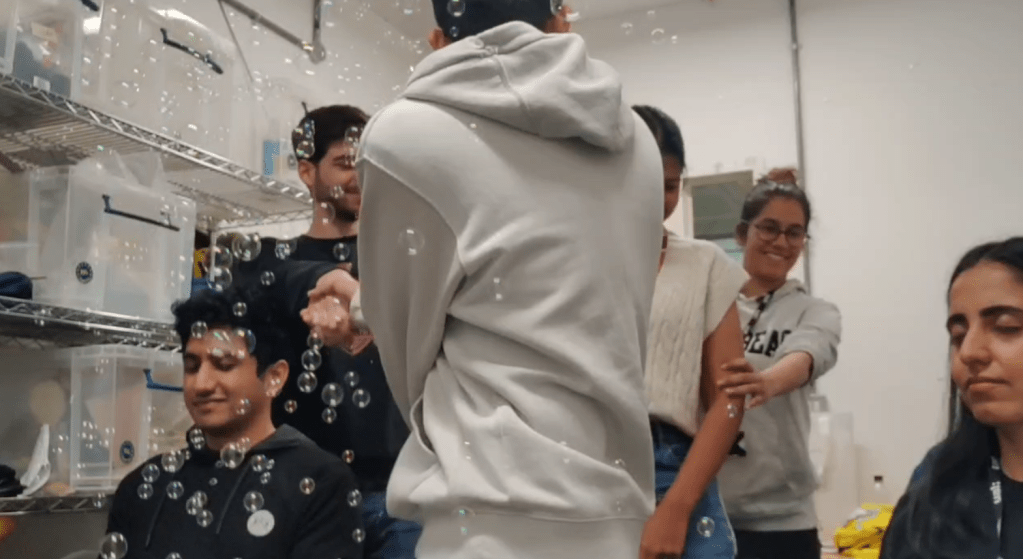
We received the following feedback from this first-pass experiment:
- With eyes closed, you cannot feel the bubbles landing on you and miss out on the visual aspect of the experience
- There were too many instructions, making the experience feel “task-based”
For the prototype we were to show to the class, we decided to move away from networking and instead demonstrate decomposition by having participants cut away at a network above their heads once “activated”. We trialled several materials for the network, settling on string as it was the easiest to assemble in our short remaining time.
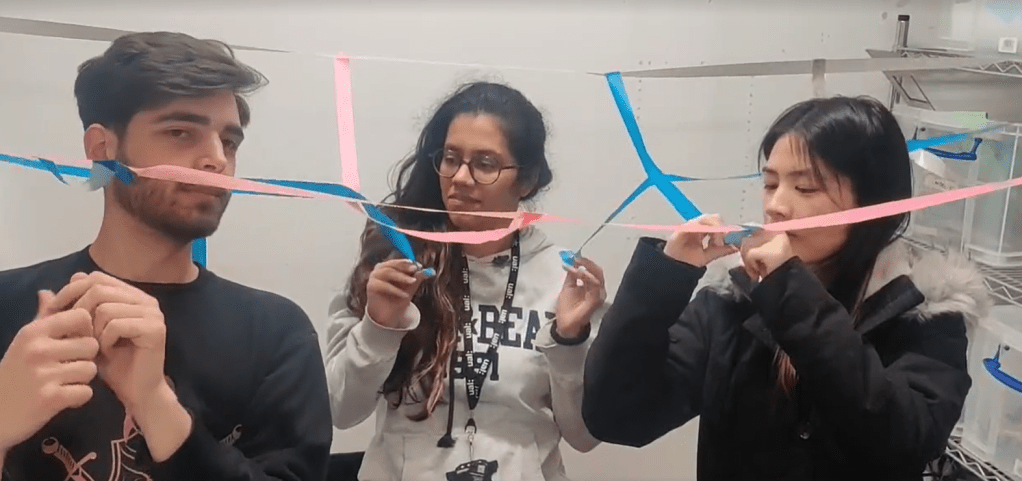
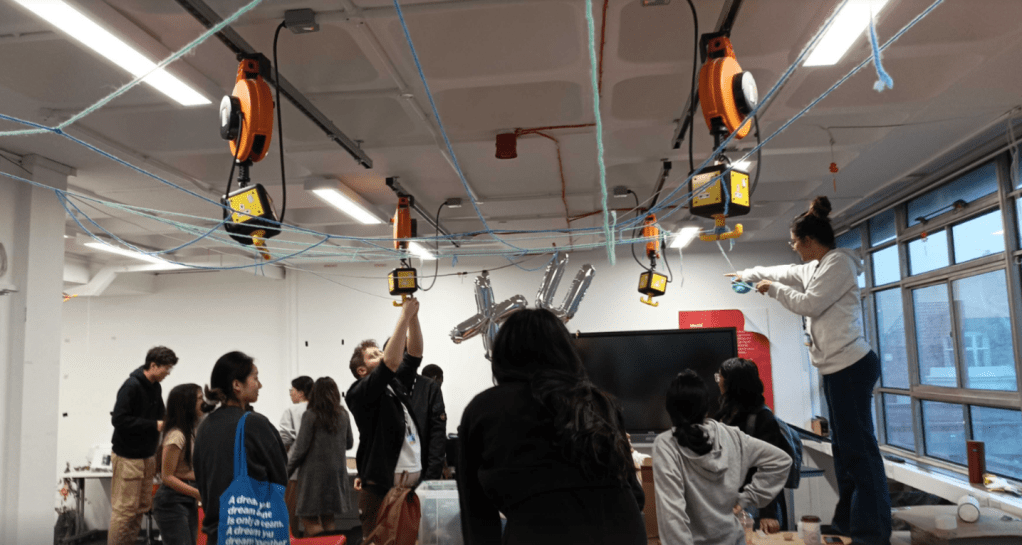
We performed the experience in front of the class on Thursday, and received the following feedback:
- The bubbles were an effective metaphor to some (but not all) of the class in communicating the spores idea
- The group experience aspect was greatly appreciated
- We needed more fidelity – more closely recreating mould’s look and, especially, feel
- We were conceptually quite strong but had not sufficiently considered our materials
We decided to improve on these aspects for the next week.
Reflection: I had pushed the group too early to use AEIOU following my own (incorrect) understanding, thus costing us the opportunity to begin with a more thorough observation stage. I had also advocated strongly for conceptual thoroughness over experimentation, and had encouraged the group down a path that did not yield the most interesting results. I should have been more open-minded when considering concepts with more interesting material ideas.
 Harry Solomons