We started our next stage of research by re-attempting our AEIOU observations. We chose the kitchen as the area, and assigned each of ourselves a letter – I was given E for Environment.
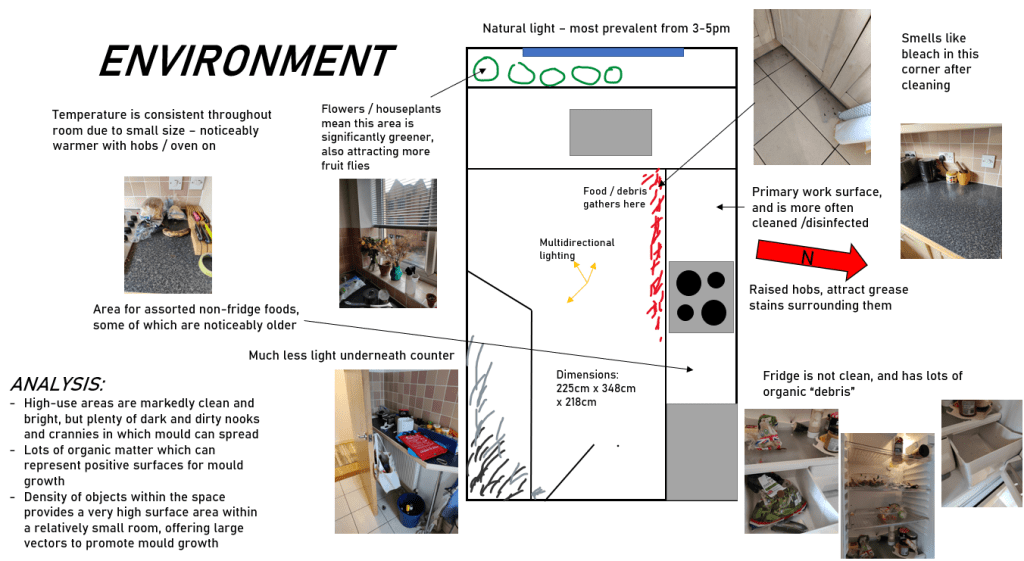
When we compiled our observation results, we made the following findings that we had not considered previously:
- Surface area of objects played a big role in mould development
- We had particularly visceral reactions to mouldy food compared to mould appearing elsewhere
- All of us had paid close attention to humidity, temperature and airflow as risk vectors
We decided then to focus on the fridge as our area of interest, as all 3 of these factors played a key part.
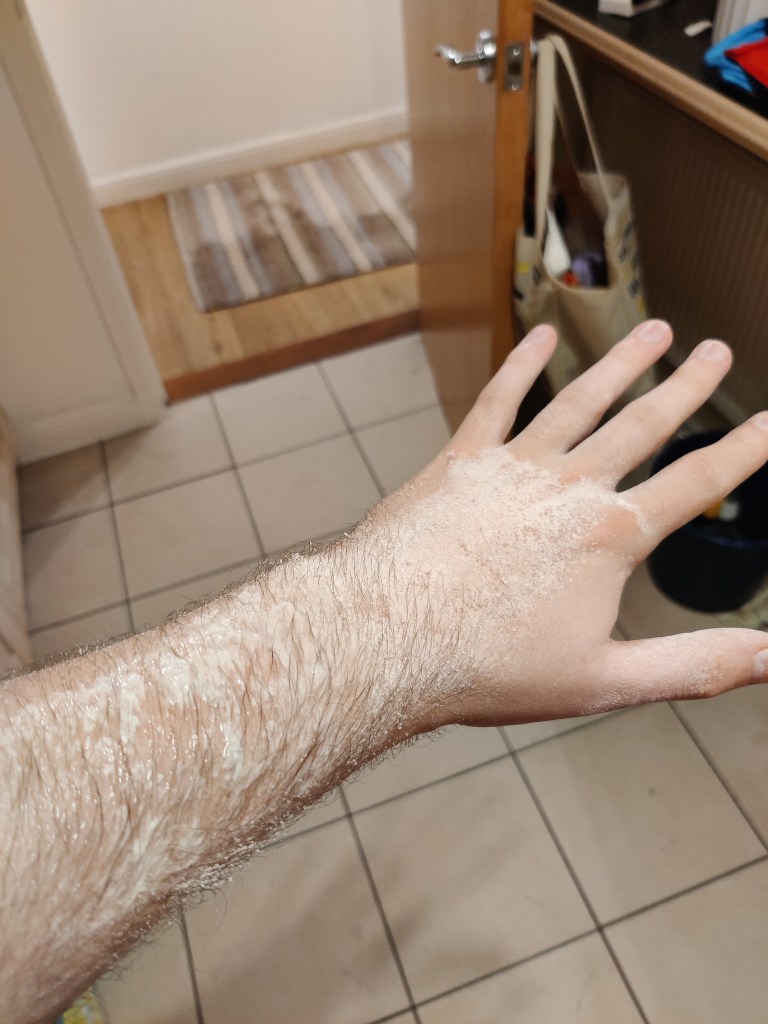
We also experimented with materials that were closer in look and feel to mould than bubbles. I had tested flour as a replacement to represent spores, and we had considered cotton wool as a better representation of mould’s texture – wool dusted with flour was an especially promising material to us.


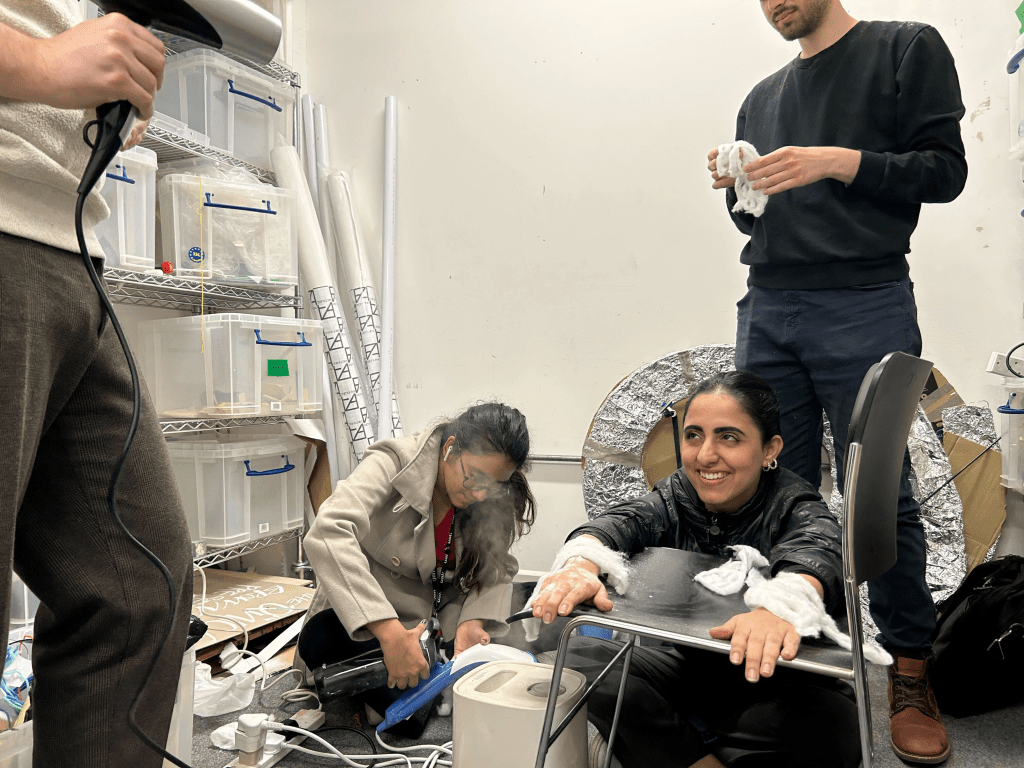
We also did some trials playing with humidity, temperature and airflow by using hairdryers, a humidifier and steam irons. The humidifier especially did not do too much in the couple of minutes we would have for the experience on Thursday, but we decided to keep it in as a visual effect – in retrospect, this “kitchen sink” approach was not helping the cohesion of our final product.
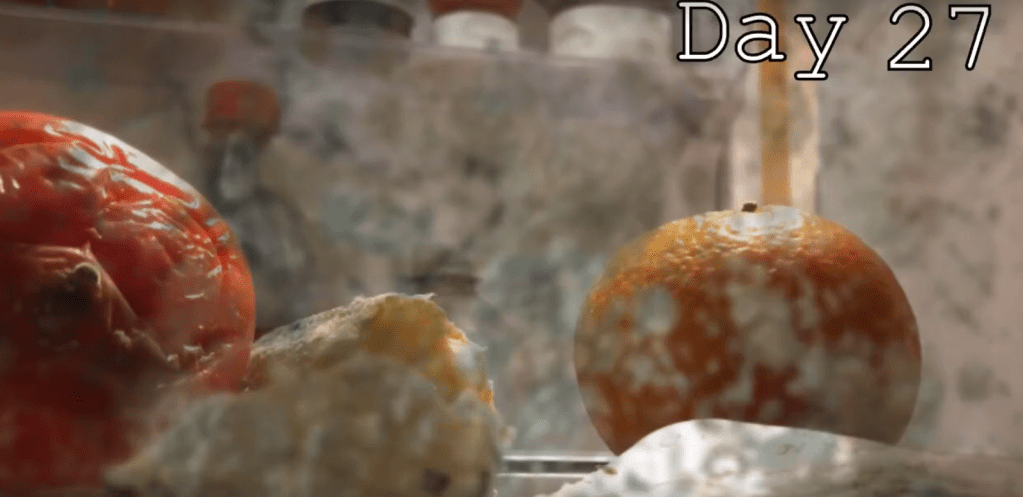
To frame the whole experience, I edited a video of the inside of a fridge slowly going mouldy when left open over the course of several weeks. This would allow us to frame participants as items of food inside the fridge, helping to ground the metaphor.
When presenting, we cut three holes in a dust sheet for participants to place their face into, as well as additional holes for their hands. When each item of food would go mouldy in reality, we swapped out a fresh piece of food we had placed in front of them with a mouldy version, while firing the hairdryers and irons, placing our cotton wool mould (which we had painted accurate colours onto) on their hands, and spraying flour at them.


We received the following feedback:
- While fun and physical, there were two many moving parts for the experience to be cohesive
- We may not have put the participants at risk, but we did not keep them adequately informed of what was about to happen before they participated
- The various aspects (video, environment, the mouldy food itself) didn’t come together and just felt a little messy
Reflecting on this, I am glad we went for a very different experience to last week as it gave me my first experience of practicing something performative and multi-sensory. It also gave me very useful pointers for where we went wrong in terms of incorporating too many moving factors and not ensuring the experience as a whole was cohesive and clear, and was a great help in exploring a type of experience I had little prior contact with.
 Harry Solomons