Building on our work on altering posture, we started to look more closely at the technical systems underpinning public surveillance systems. We found numerous references to an open-source library called OpenPose that many of the papers we read directly implemented within their own systems (Liao et al., 2020; Viswakumar et al., 2019). I began trying to implement an OpenPose detection system of our own, but found that resolving incompatibilities with Python were beyond my capabilities within the time we had. We instead used Photoshop to trace OpenPose equivalent silhouettes over photos of our own postures. In retrospect, this was not an acceptable equivalent to more rigorous testing, and so I should have been more upfront with my teammates about my technical capability.
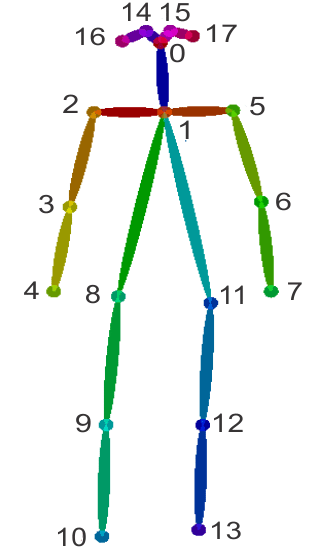
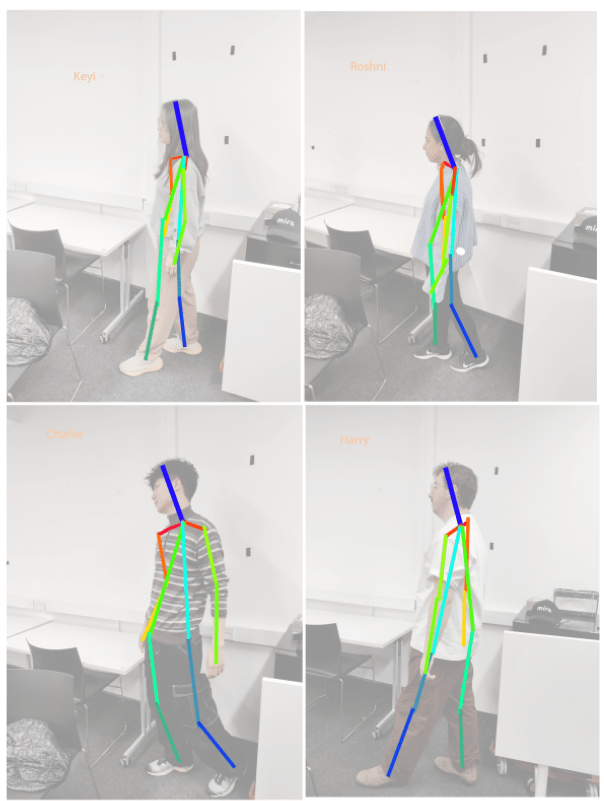
We then started to use these keypointed silhouettes to consider how we may adjust people’s posture. We tried a multitude of different tools, settling on the following:
- Insoles with bottle caps that adjusted the way you spread pressure across your feet, changing the motion of your hips;
- Elbow braces that restrict the angles formed between your forearm and upper arm;
- A neck brace that pulls your head forwards, changing the angle between your head and shoulders.
Each of the tools was built to be adaptable to the wearer’s size, and easy to build on your own.
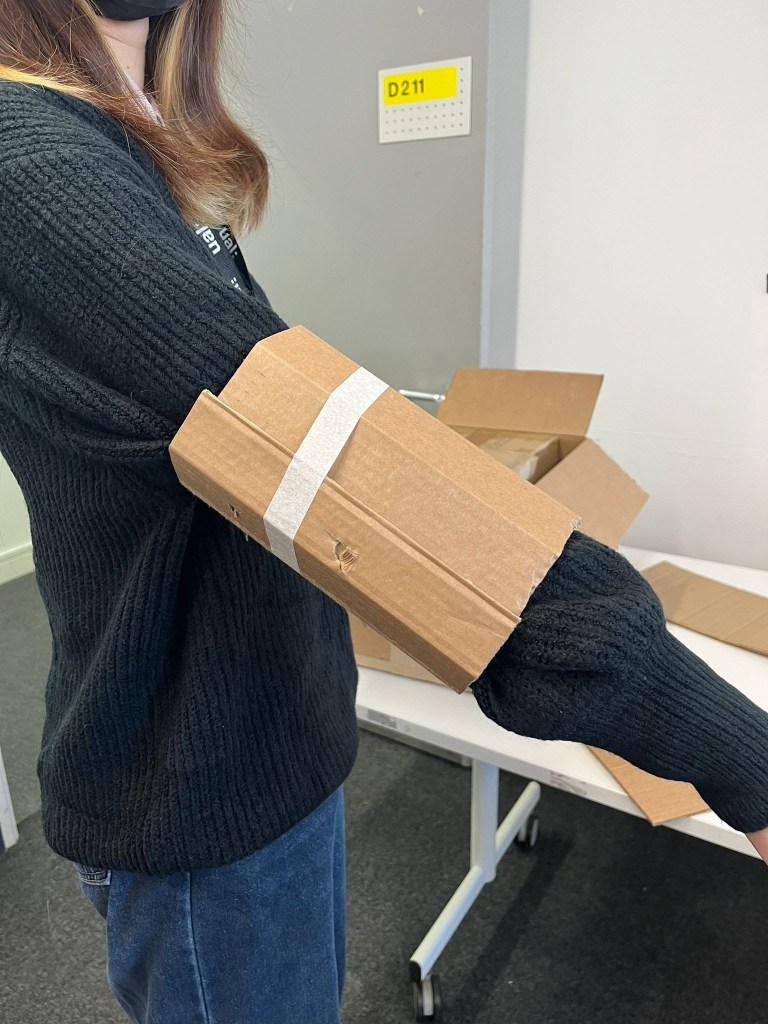

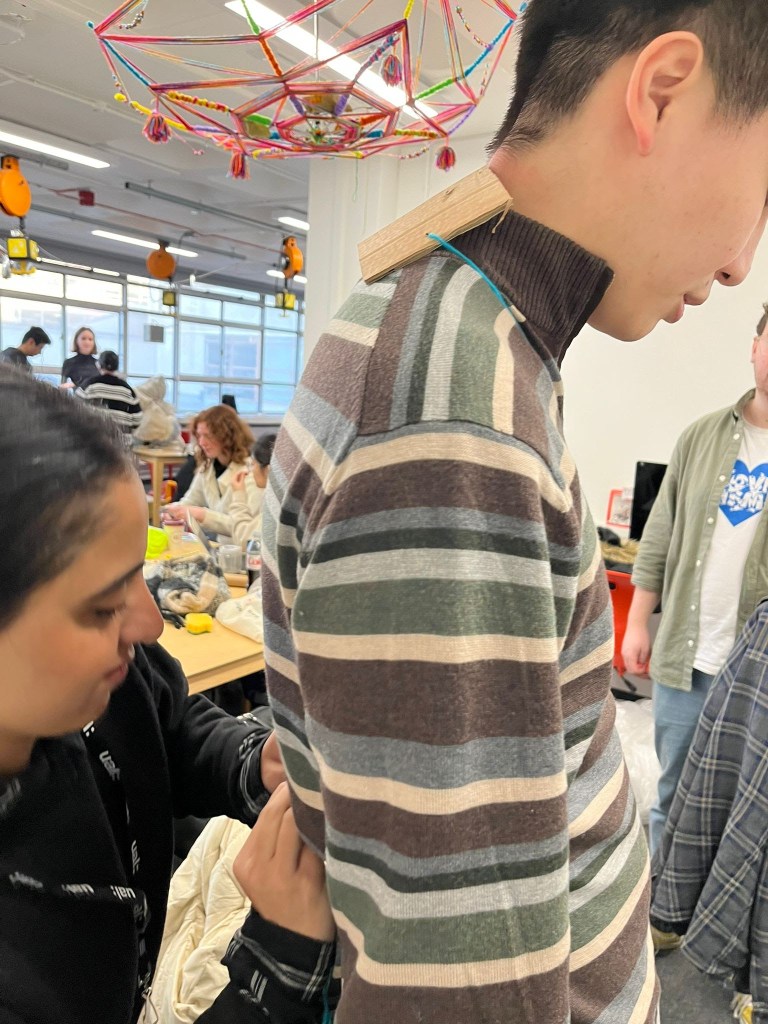
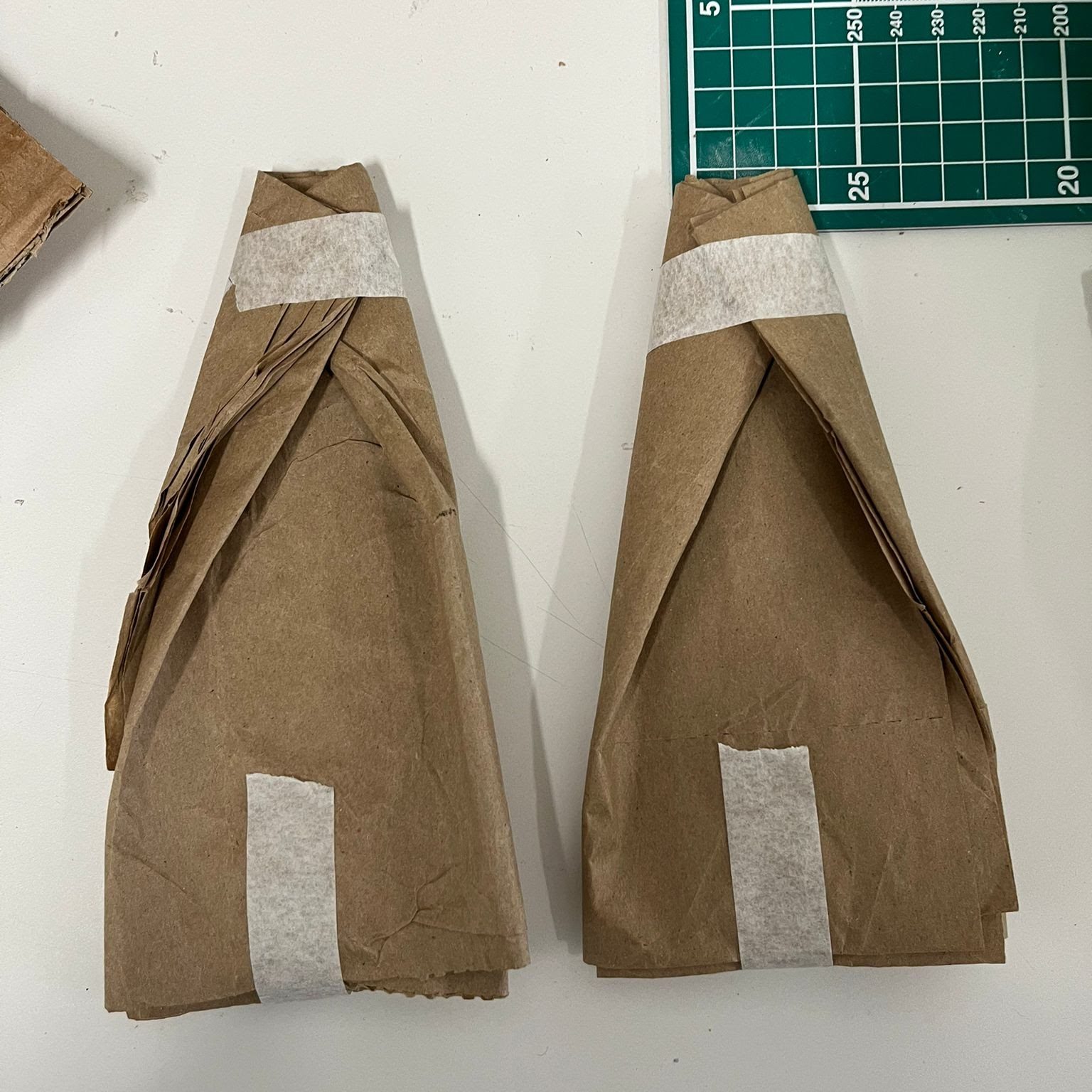
We also decided to bundle these items into a kit, that Roshni designed an instructional manual for, that would encourage the spreading and sharing of these tools and the development of new ones to extend the kit.
At this point, we faced a question of abusability: what if this kit were to be used by malicious actors and violent criminals to avoid law enforcement? I don’t believe that we gave this the attention it deserved due to time considerations, but it will be a key factor to consider in longer briefs.
In our presentation, Carlotta demonstrated the kit, and it was immediately obvious that her posture changed significantly wearing the tools.
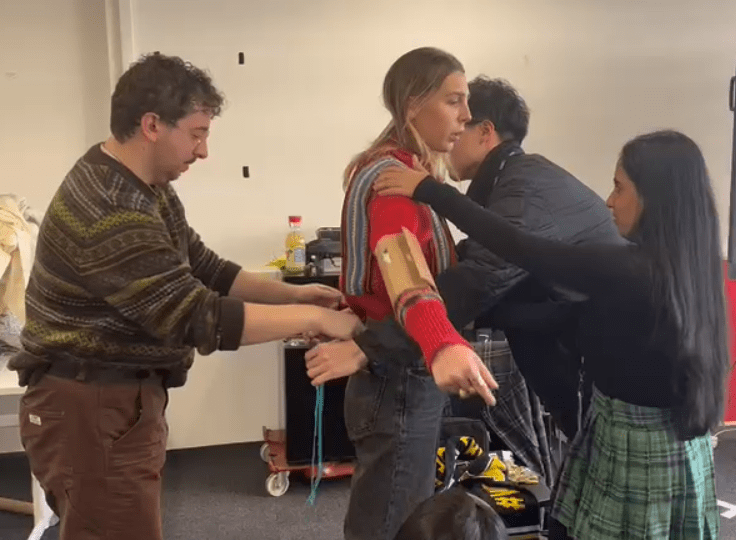
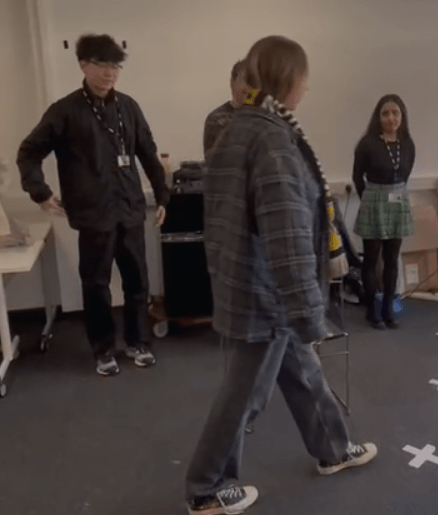
We received the following feedback:
- Cardboard wasn’t an acceptable material for a final product (personally, I disagreed with this; I maintain that cardboard successfully reinforced the idea that these tools could and should be built by individuals);
- There was a mismatch between our “DIY” ethos and the fairly slick nature of our branding;
- We needed more robust testing in order to better sell our ideas as non-speculative.
In retrospect, this brief reinforced the importance of testing and quality guarantees in our design. While I am proud of what we built as being good representatives of our overall ideas, without more robust testing they could only really be seen as proof-of-concept prototypes. As it was my own technical failings that prevented full testing, it was important that I was more open with the group at an earlier stage about the viability of our plans.
 Harry Solomons