Dates: 23/01/23 – 27/01/23
Teammates: Keyi Cao, Qibin Cheng, Lingjia Fang, Mengdie Lu
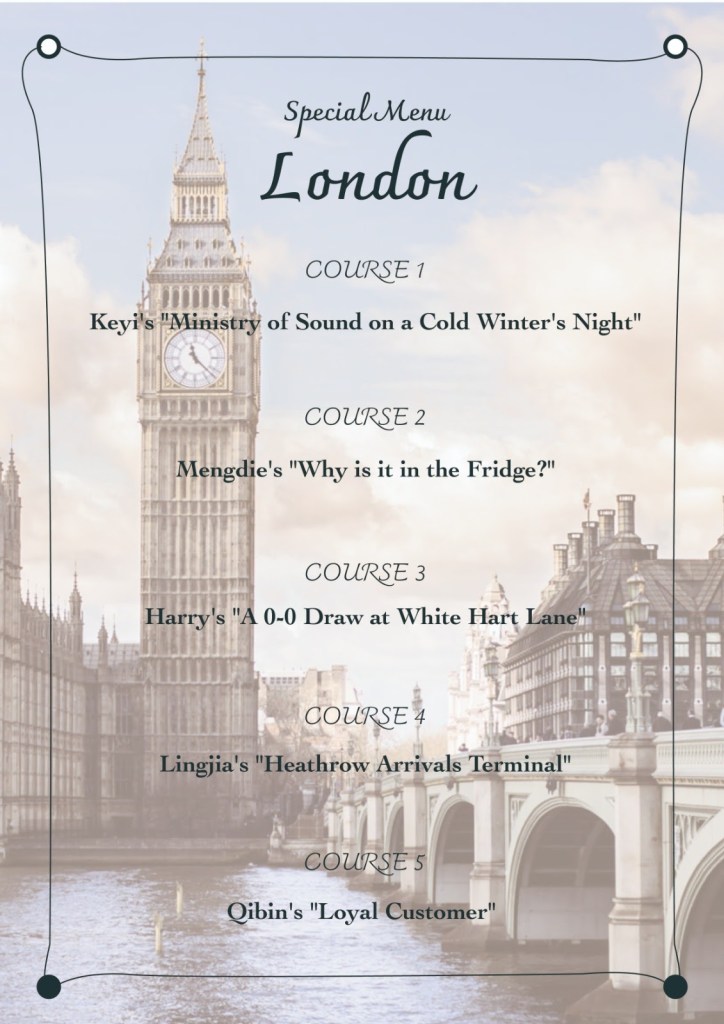
Our task this week was to produce a journey connecting the inner world to the outer world (or vice versa), particularly focusing on the study of psychogeography. Our final project was a tasting menu of 5 dishes, each chosen by a member of the group as a dish we connected to our emotional experiences in London. For instance, my course was a builder’s tea from the old White Hart Lane – a strong memory from my first visit to London proper, aged 4.

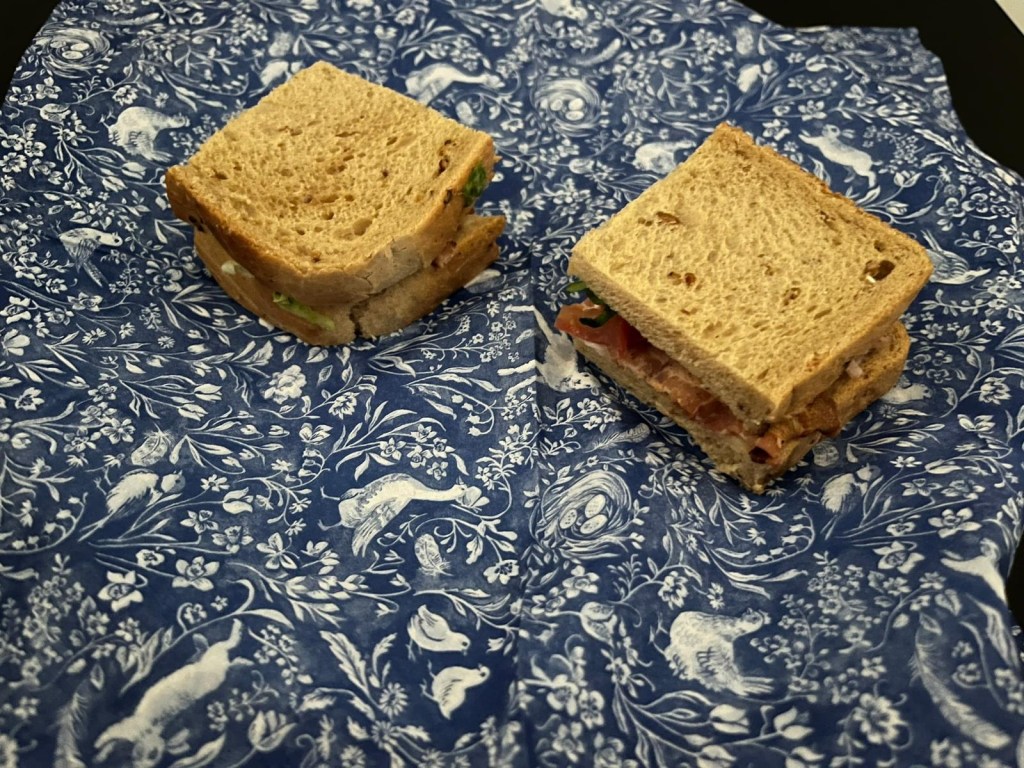

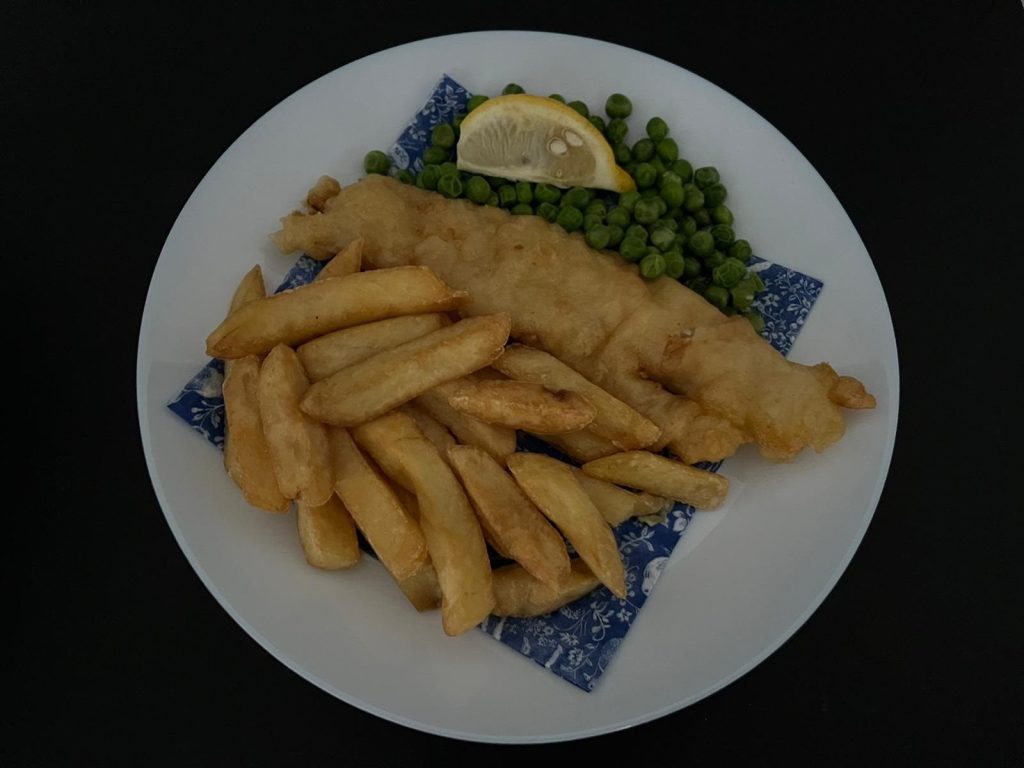
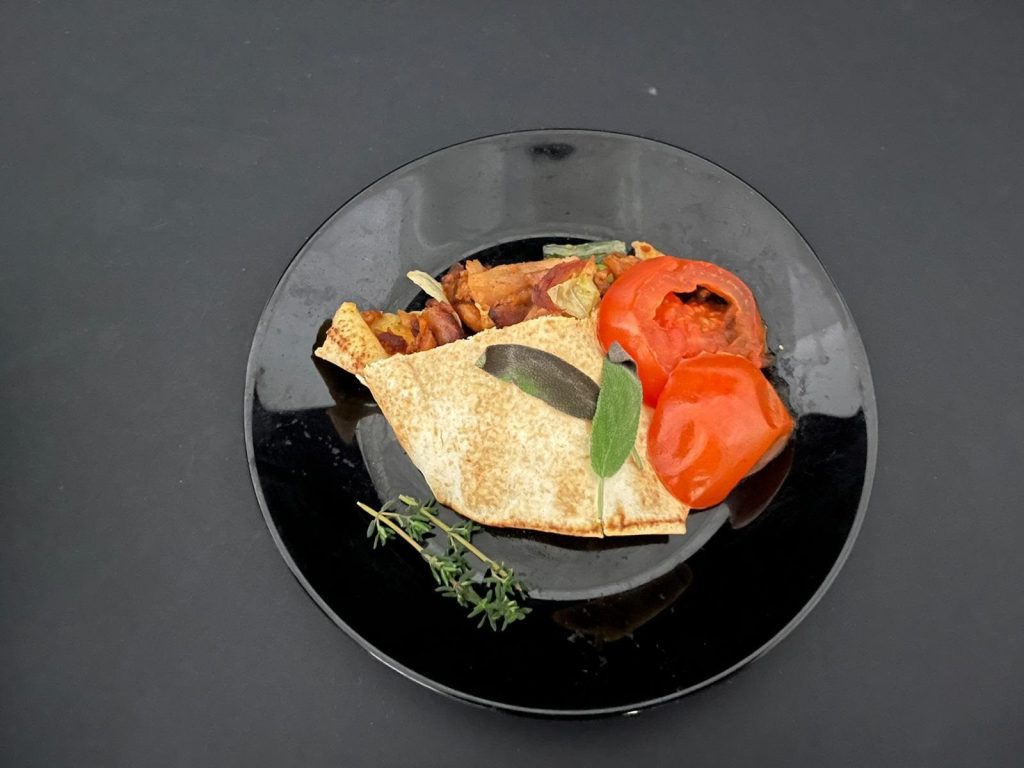
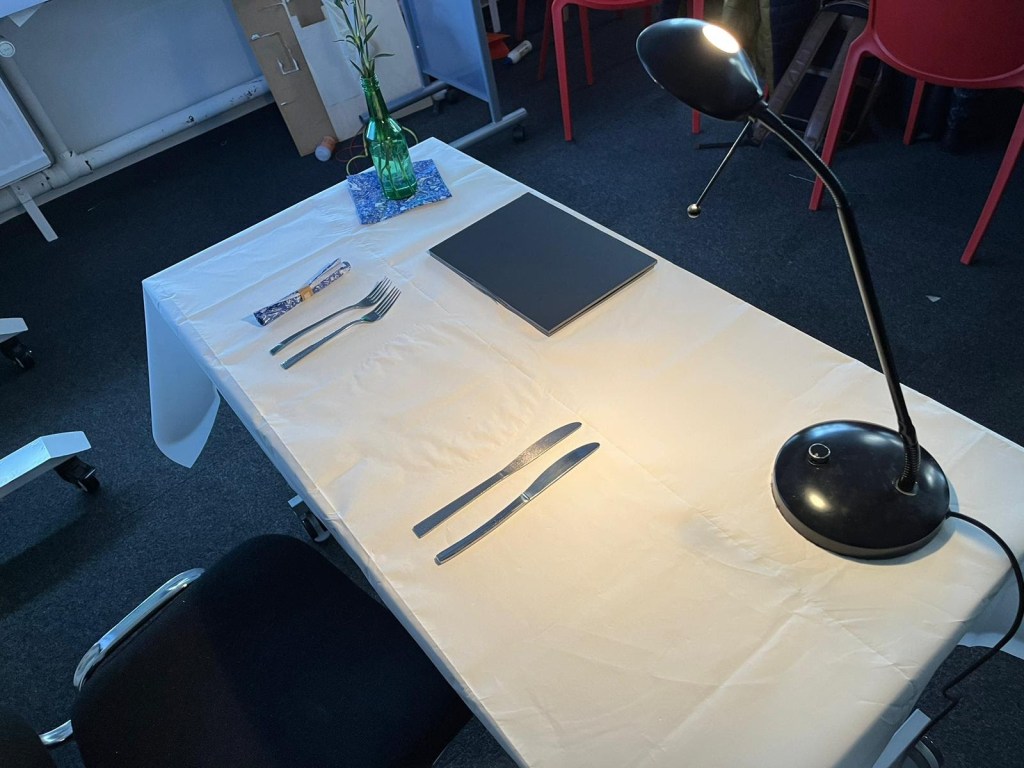
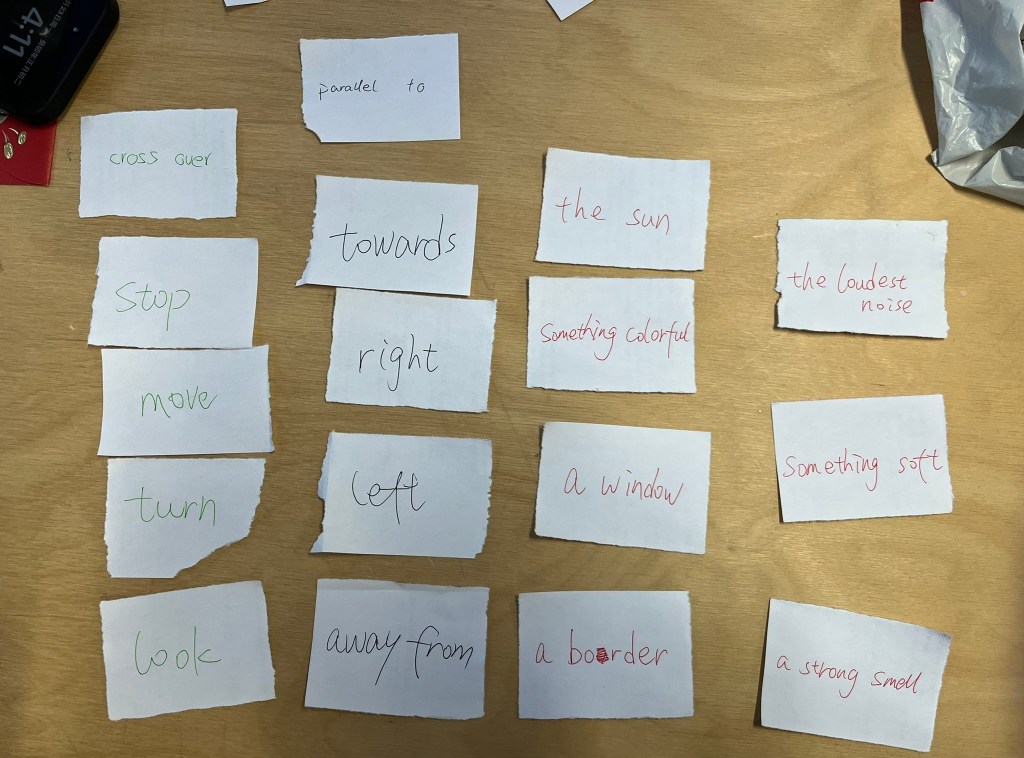
The week started with a tour from Rosie Oliver of Dotmaker Tours around Central London on the theme of “power” – including stops at Somerset House, Waterloo Bridge and the Royal Courts of Justice. We then set out the next day to Hackney Marshes to perform a dérive – an unplanned journey across a landscape. We did so armed with a pack of cards that we had made the previous day that would allow us to draw random courses to take – the combination of cards drawn would give an instruction such as “MOVE / TOWARDS / A WINDOW”, which we followed.
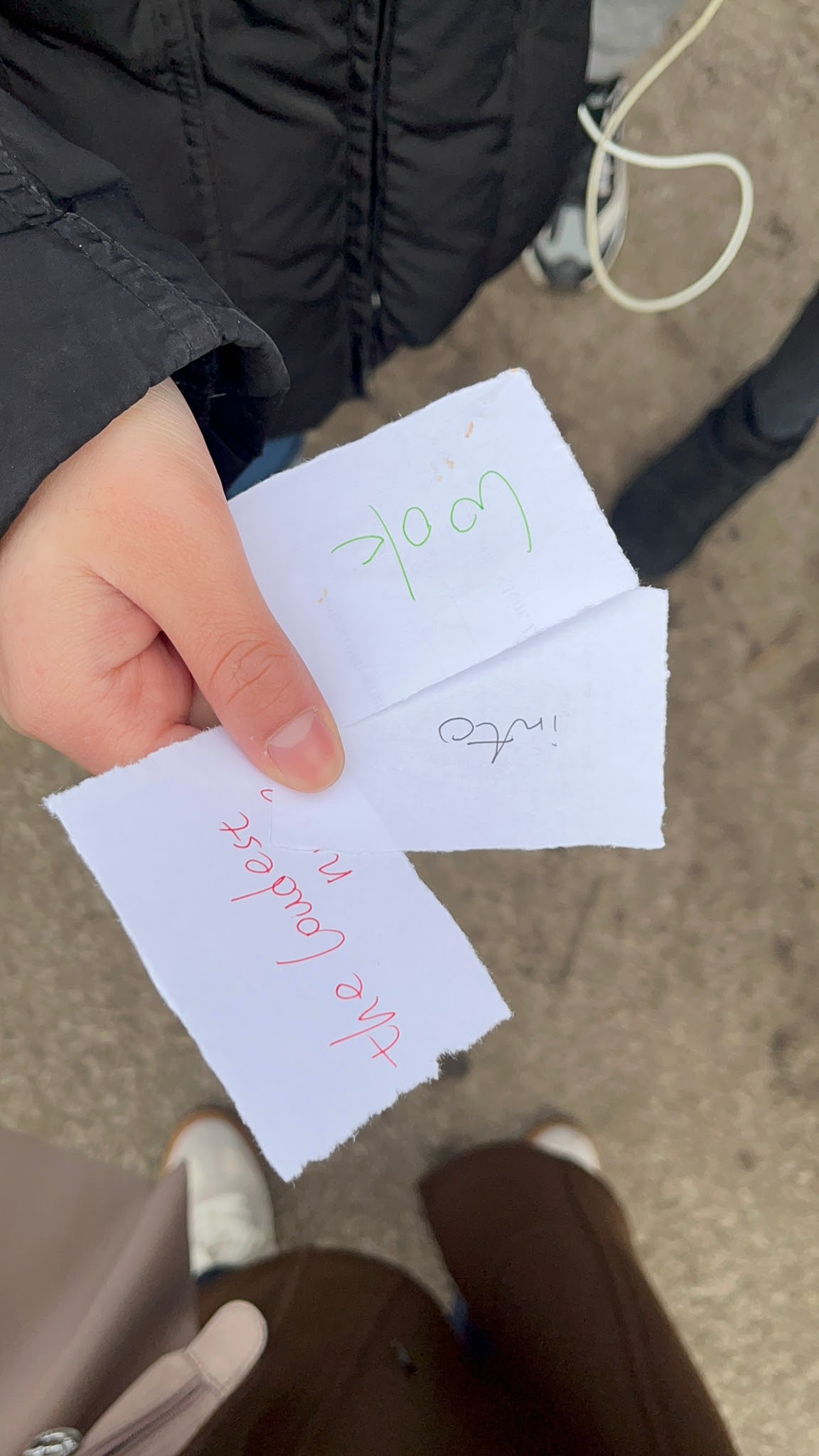
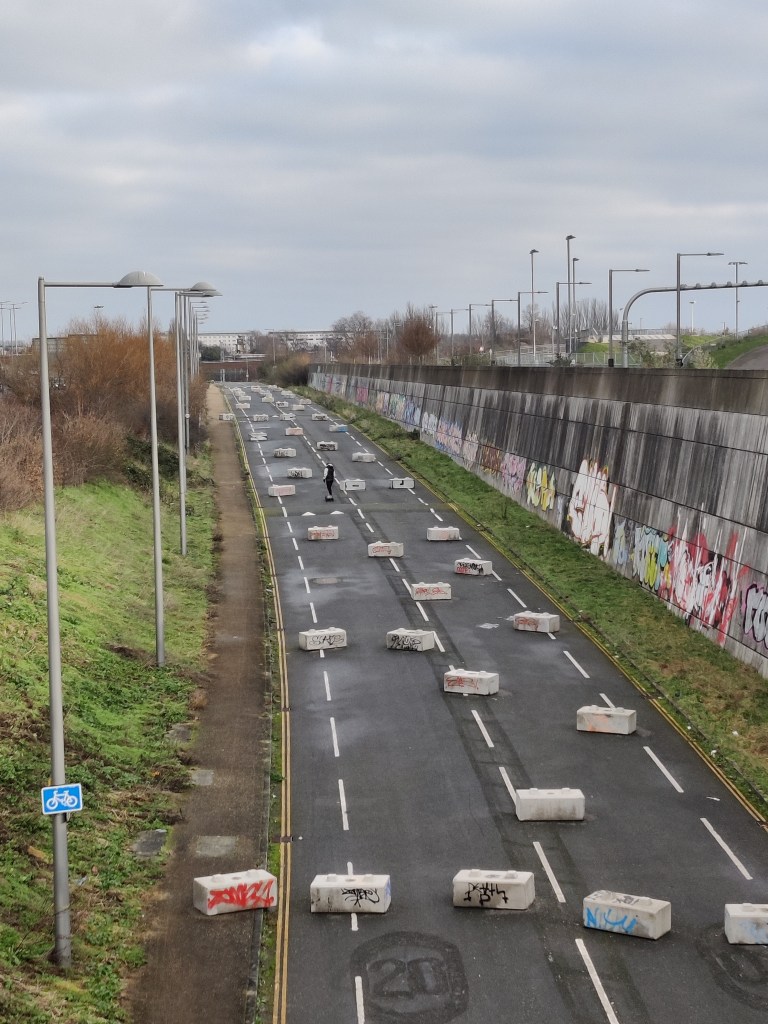
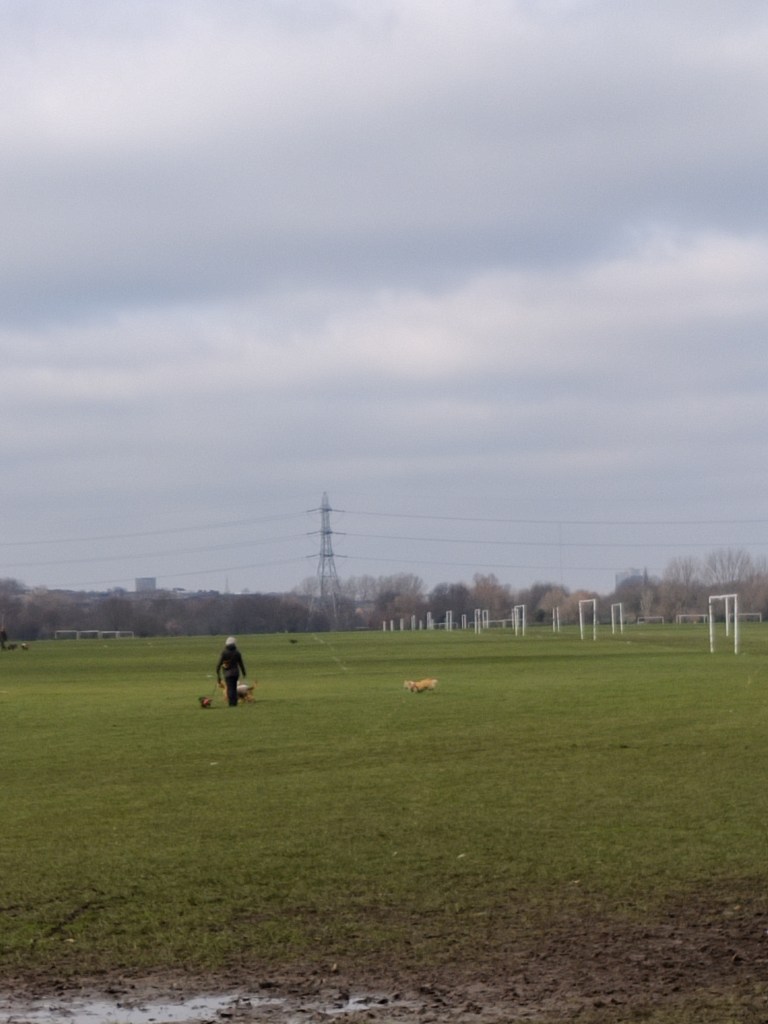
We ended up taking little in the way of ideas from our dérive, and came home somewhat disappointed. We did, however, latch on to the idea of memory as a driving force in psychogeography – as I had spent time at the Marshes when younger, I had more specific emotional connections to it.
Reflecting, we definitely should have considered the purpose of our dérive more closely. We did little to no prior research on the history and geography of Hackney Marshes, and so found it difficult to connect to the most interesting psychogeographical ideas available.
At this point, we came upon another issue. The language of the brief was highly vague and ambiguous, and we were struggling significantly to generate ideas – it was only when revisiting the definition of psychogeography as the study of emotional connection to places that we advanced our idea from the abstract “memories” to a more actionable route of “food”. We also struggled significantly with communication within the group – language barriers were accentuated by difficult and ambiguous language in the brief, which could have been avoided by diving into more practical, rather than theoretical, ideas at an earlier stage.
The feedback to our presentation was as follows:
- The theatre of the scene was very helpful for establishing context
- Each course was under-explained – a one or two sentence introduction would have been appreciated
- The idea was not communicated as clearly as possible
I disagree with some of the feedback we received. Our hesitancy to explain each course seemed to spark some more introspection as to possible interpretations and what other members of the class would have chosen, and led directly to a post-presentation discussion of my own course with Bex (our volunteer).
Looking back, I feel that this was the most challenging brief we’ve had so far. I’m very grateful to my group for persevering through incredibly tricky theoretical concepts, and I’m proud that we presented an outcome in an exciting format, very different to that of any other group.
 Harry Solomons