Following on from last week’s feedback, this week we decided to tack closer to the expectations of AXA as project partners, not through necessity, but because we felt it would be interesting to create something new from the combination of our more speculative ideas and the grounded concepts of present-day insurance. As such, this week we narrowed our scope to a specific combination of car insurance and artificial intelligence: self-driving cars.
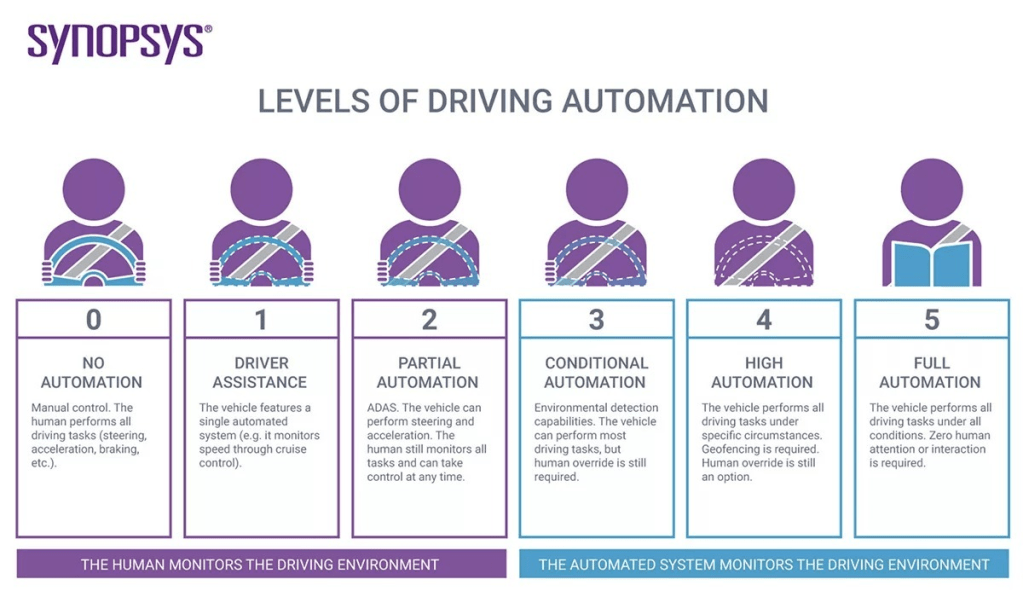
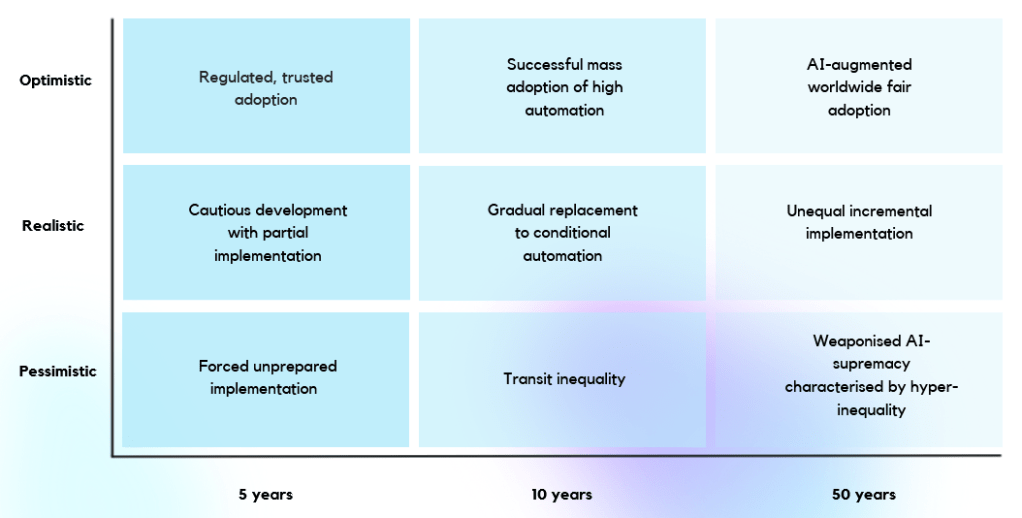
To begin with, we gathered multiple sources expressing different views of the future of self-driving vehicles and used this to conduct a scenario building exercise, in which we imagined optimistic, pessimistic and realistic scenarios for 5, 10 and 50 years into the future. As expressed to us in feedback later on in the week, we didn’t adequately define who exactly our scenarios were optimistic or pessimistic for, and so we risked designing for too unspecified a group of people.
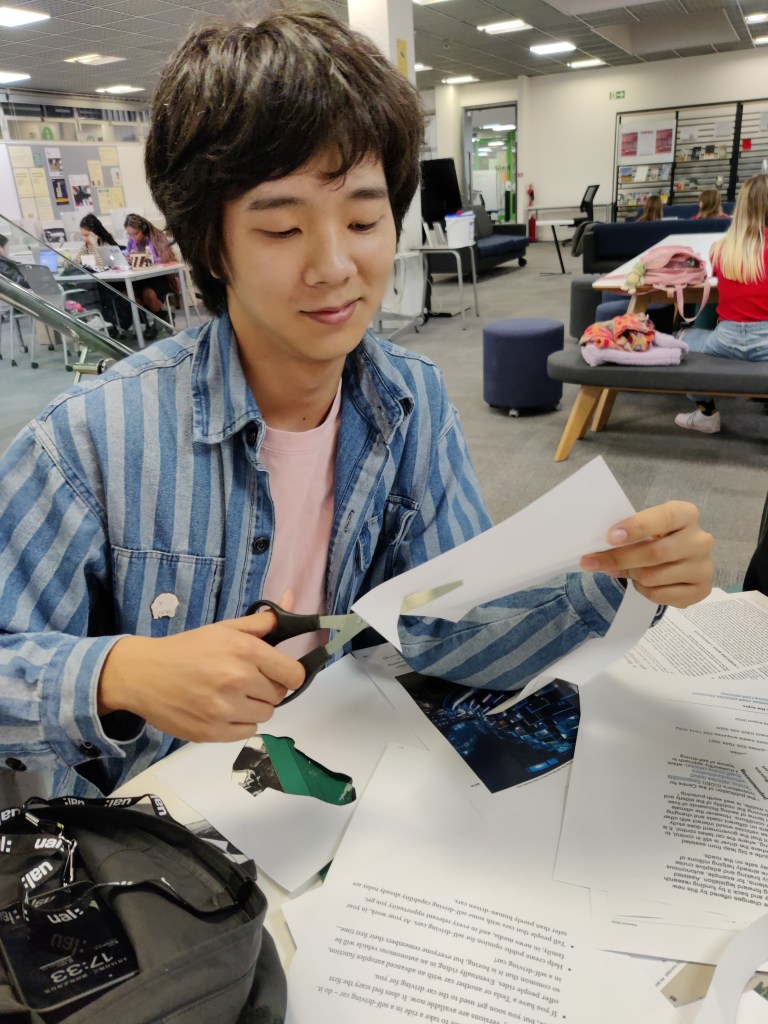
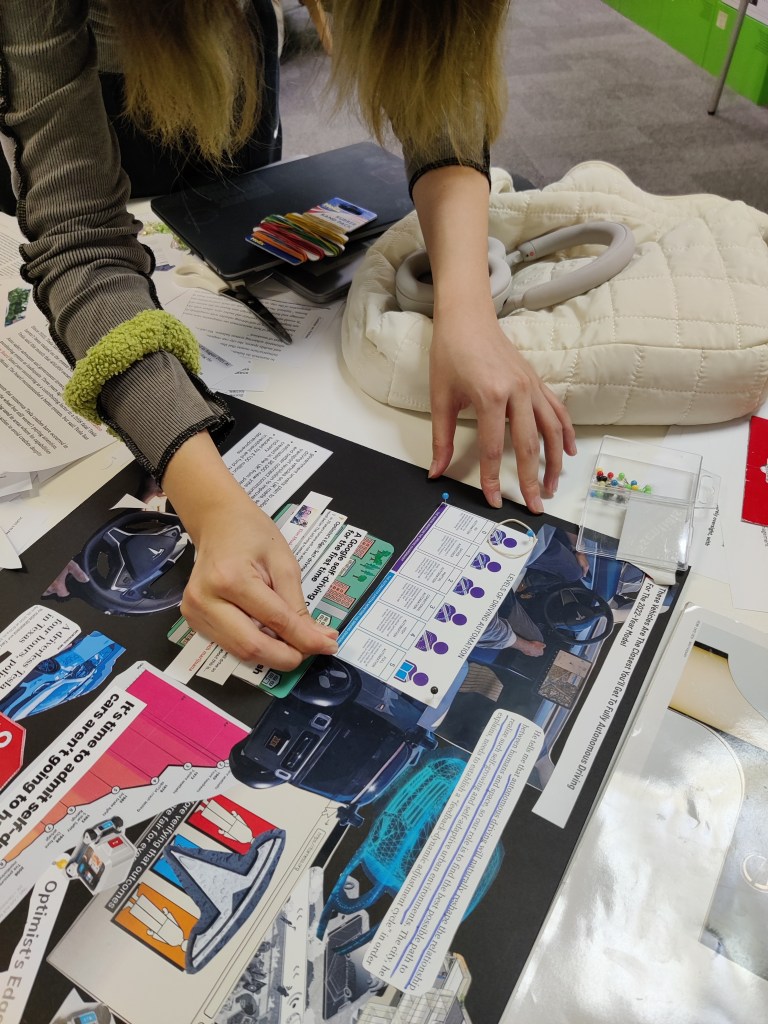
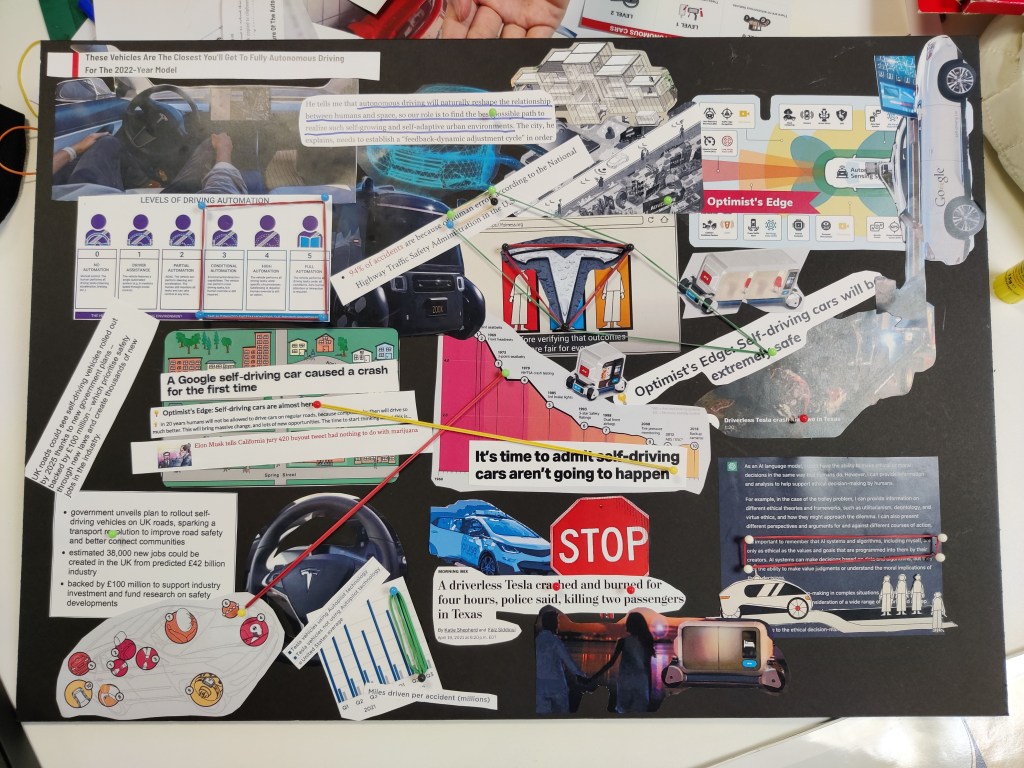
We also wanted to make sure these scenarios were grounded in pre-existing material, and so we constructed a collage using web articles, photos in magazines and research papers, to provide us with a more comprehensive visual representation of the subjects we were dealing with.
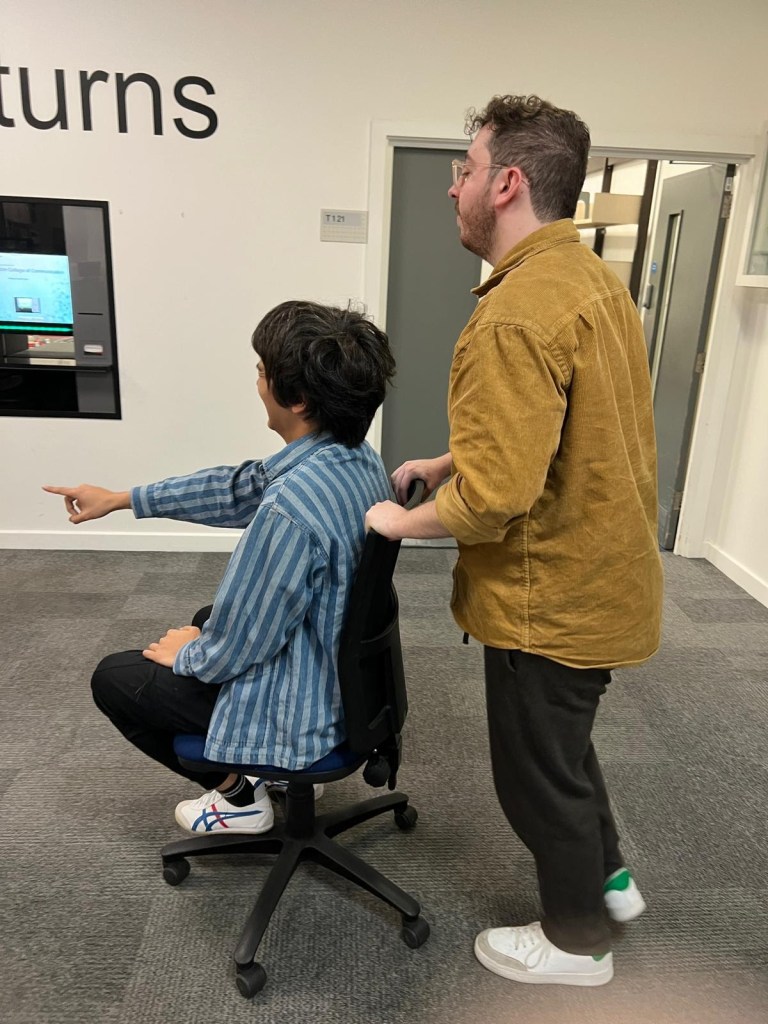
Finally, in order to move from risks on a macro scale to risks on a micro scale, we aimed to simulate some aspects of the different levels of automation through bodystorming. A volunteer sat in a wheelie chair while a helper pushed the chair around. Our levels were as follows:
- Conditional Automation: the passenger shouted directions to the driver, who followed them unquestioningly;
- High Automation: the driver operated the “car” themselves, but the passenger had their eyes open and could intervene at will;
- Full Automation: the passenger shut their eyes and relinquished full control of the vehicle.
After performing the bodystorming, we decided that trust was an additional key risk we wanted to investigate, as well as the uneasiness generated by a lack of awareness as to what was going on.
Looking back on the week, I did begin to worry that we had left it somewhat too late to begin our first stage of making, but this may be a result of misunderstanding the aims of the mid-point presentation next week. I look forward to getting more hands-on with our work in the coming week.
 Harry Solomons