This week, we presented our final outcome of the Macro UX brief; you can find a full write-up of the outcome here.

This week mostly revolved around building each component of our final presentation. We began by making the short advert that would play to promote the BlackBox app, by getting onto a London bus and recording short clips of ourselves holding out a mobile phone, as if to film an incident – this was to help reaffirm our use case.
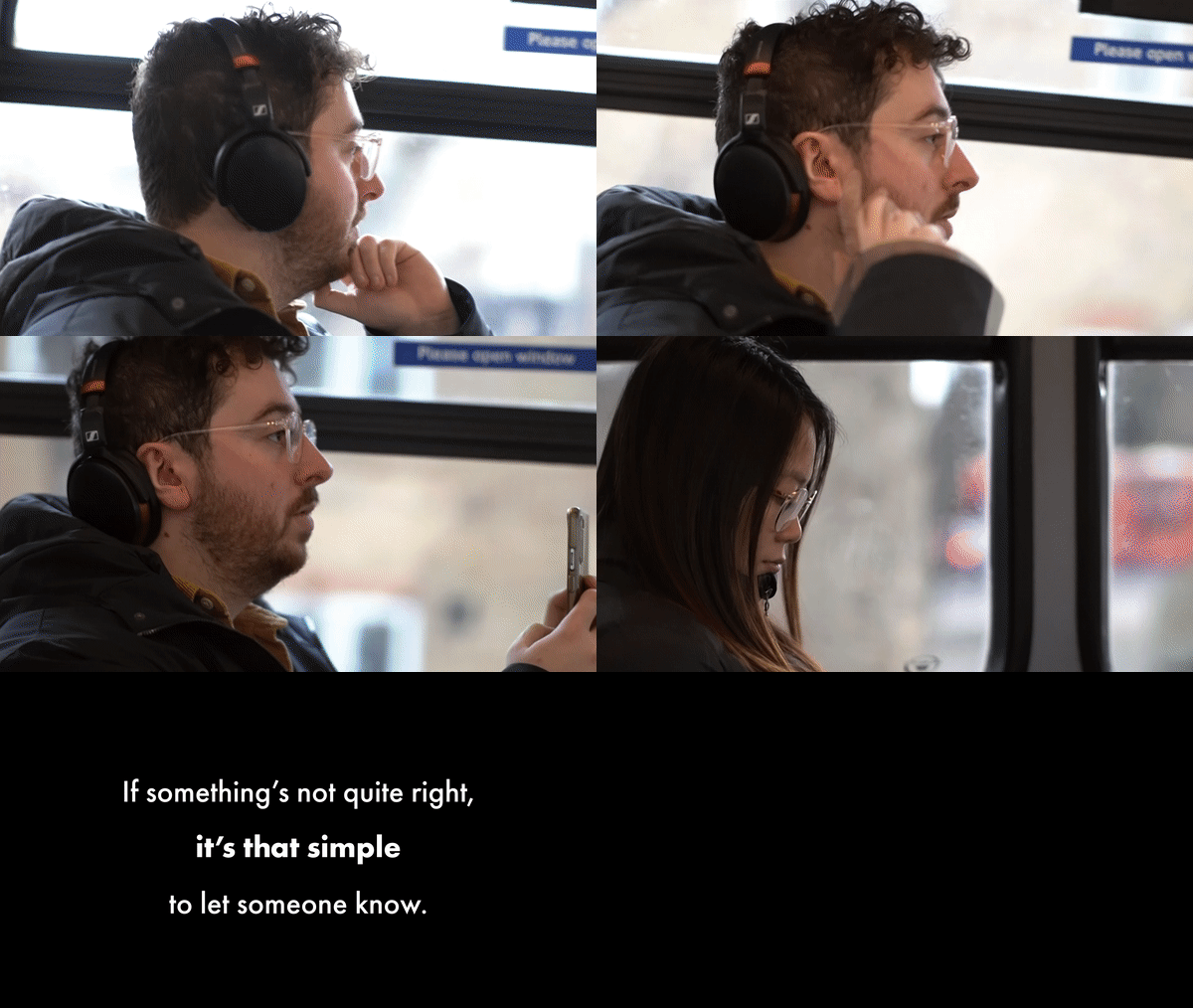
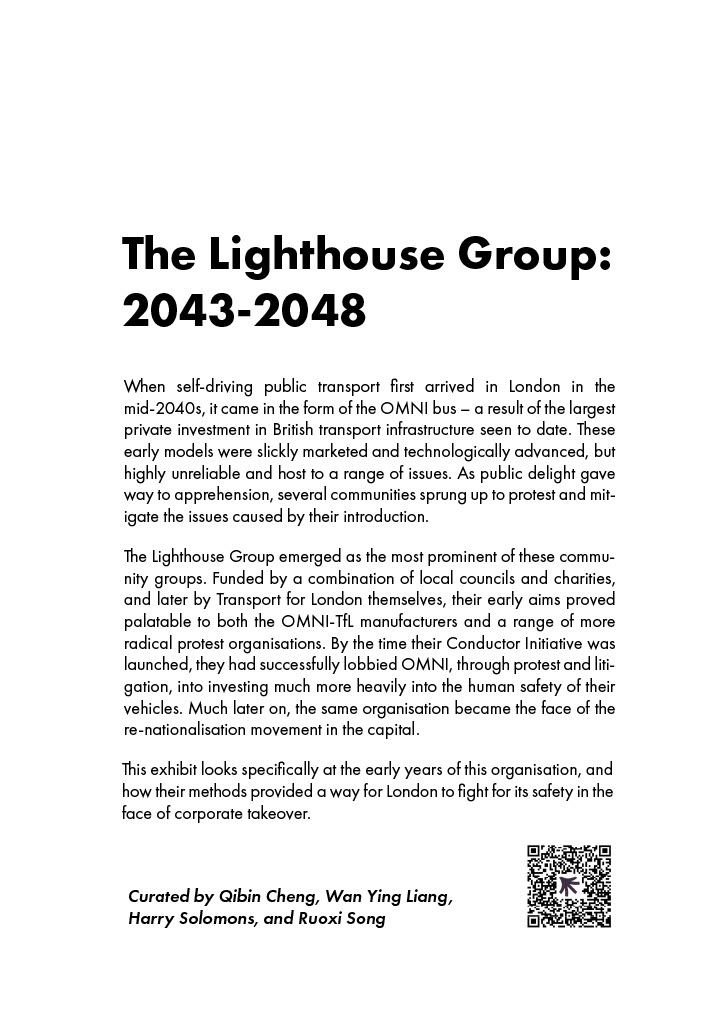
While other members of the group worked on various parts of the exhibit, I took charge of editing the above advert, writing the presentation description, and constructing a conductor’s uniform. The uniform was introduce physical devices into our otherwise primarily visual display, and to materialise another part of our constructed reality.
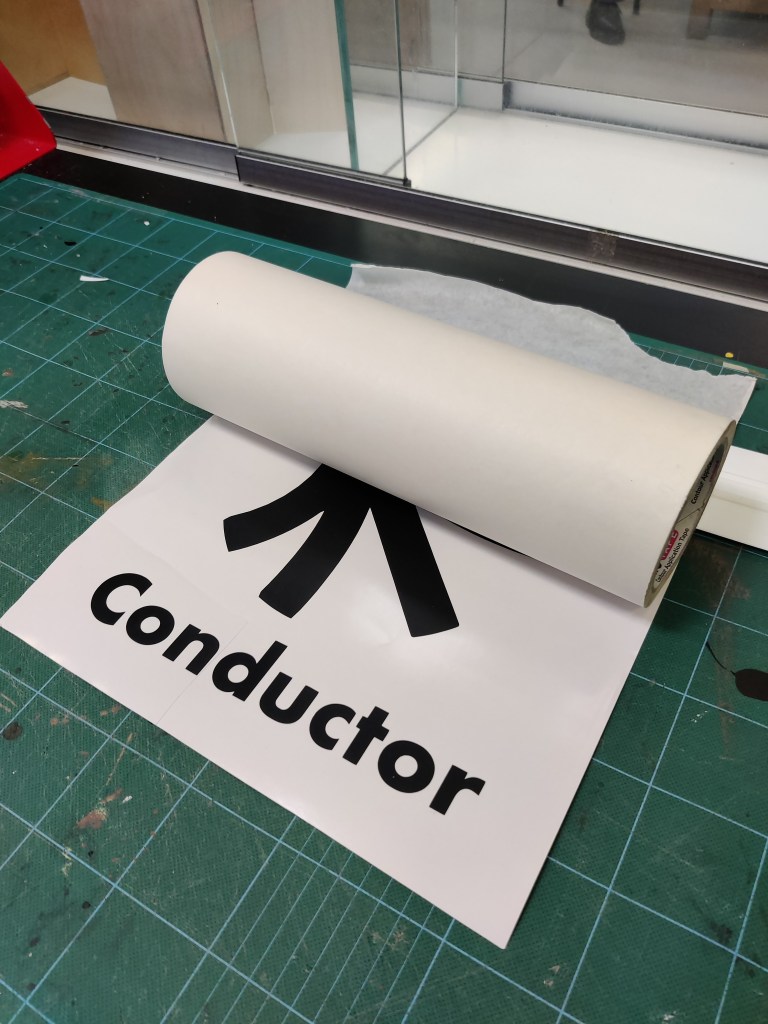
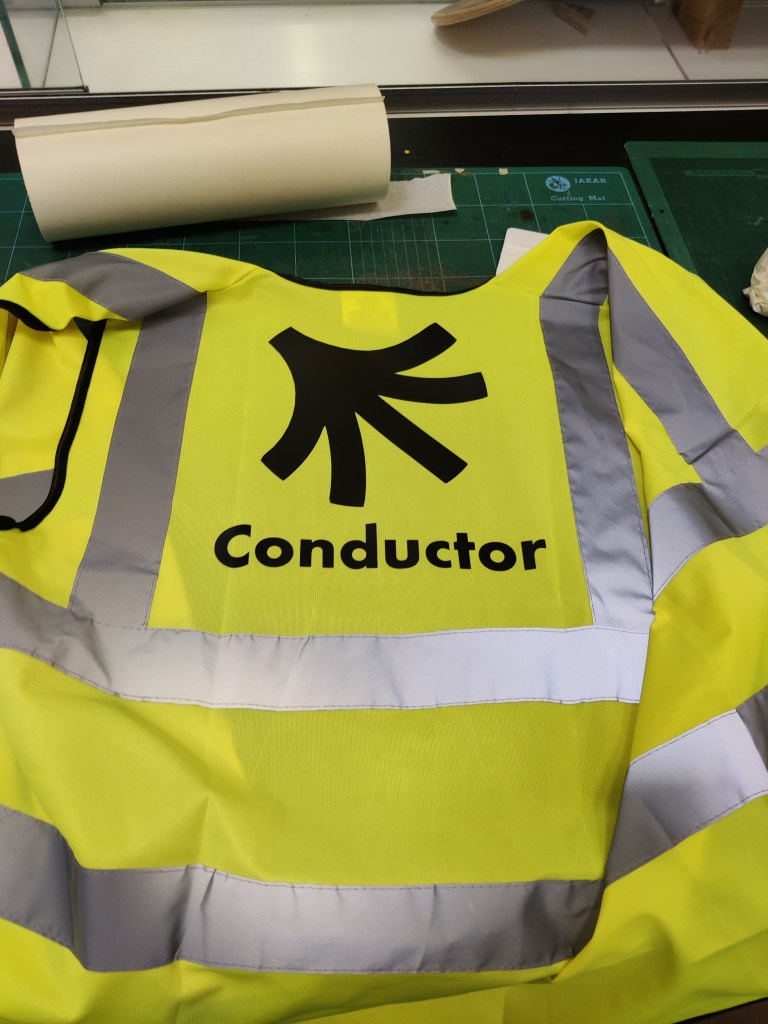
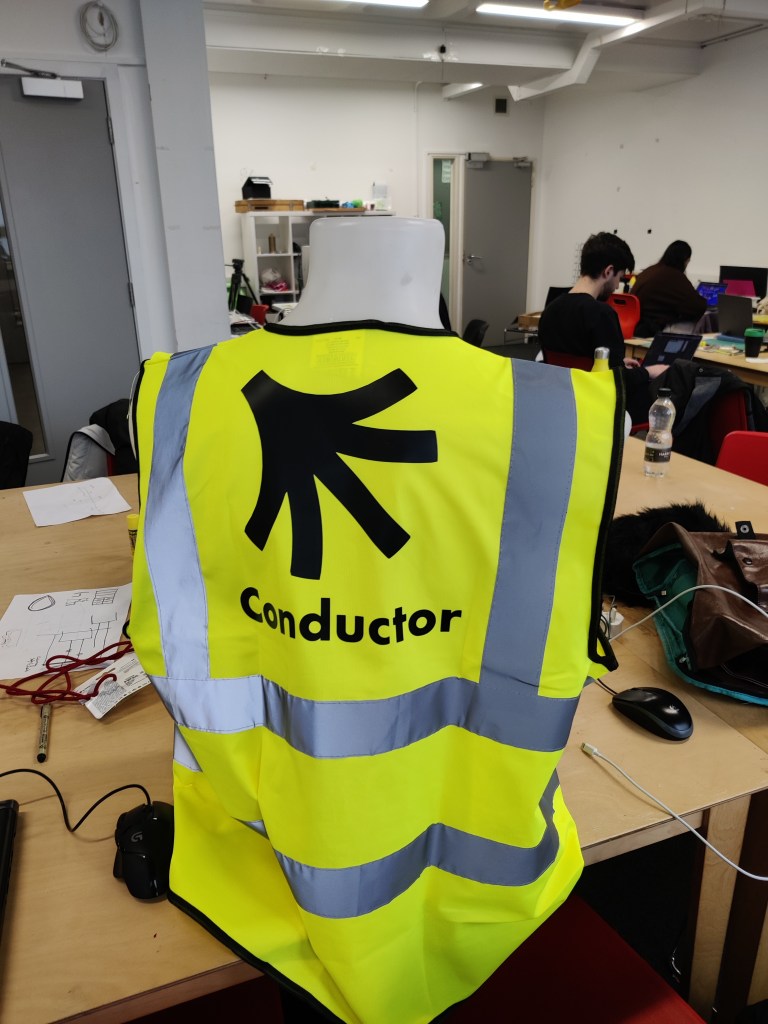
We decided to go with an exhibit that looked back at this period in history as our final presentation. This way, as our design mostly attempted to answer the brief with our constructed scenario rather than with a specifically designed tool or artefact, we could present the full scenario to our participants in an engaging way that could feel adjacent to a museum display, thus reinforcing the organisations’ imagined significance.
We received the following feedback:
- External partners were delighted with the presentation, feeling as though it had a clearer connection to present-day issues such as AI than our midpoint presentation did
- The museum exhibit was well put together, although it was not clear what role our design filled in reality outside of as a thought experiment
- It was not clear what our design had to do with “insurance”. (I disagreed with this piece of feedback. Considering our brief focused around “a way to manage risk together”, we found ourselves reluctant to engage directly with the concept of pre-emptive insurance, or anything monetary or resource-centric; I feel a speculative design offers a way to answer the central conceit of the brief, albeit through a different route.)
Overall, I am very pleased with the outcome of this brief. Both us and the other group within AXA found the brief incredibly challenging, and so I’m delighted with what we were able to build. Admittedly, we could have engaged more with our external partners; however, hearing the other group’s feedback, and considering the limited level to which the SwiftCover team made themselves available to us, I am relieved that we were able to avoid being pulled in multiple conflicting directions with limited time to actually make. Our outcome focused more on the making of materials than explicitly answering the brief, and for this I believe I gained a lot in terms of material experience and design thinking that I may not have done if we had been as zealous in adhering to the original task.
 Harry Solomons