This week, we split our group into two teams along lines of preferred research processes. After this, we designed some workshops that we could run in order to move from abstract topics discussed last week into more material outcomes, ahead of the midpoint presentation.
A few members of the group felt frustrated by the slow process we were undertaking in order to decide on a topic, as they were confident in a specific topic they had already selected. As we wished to let the topic emerge organically from our research, we decided to divide the group along these lines and pursue different directions.
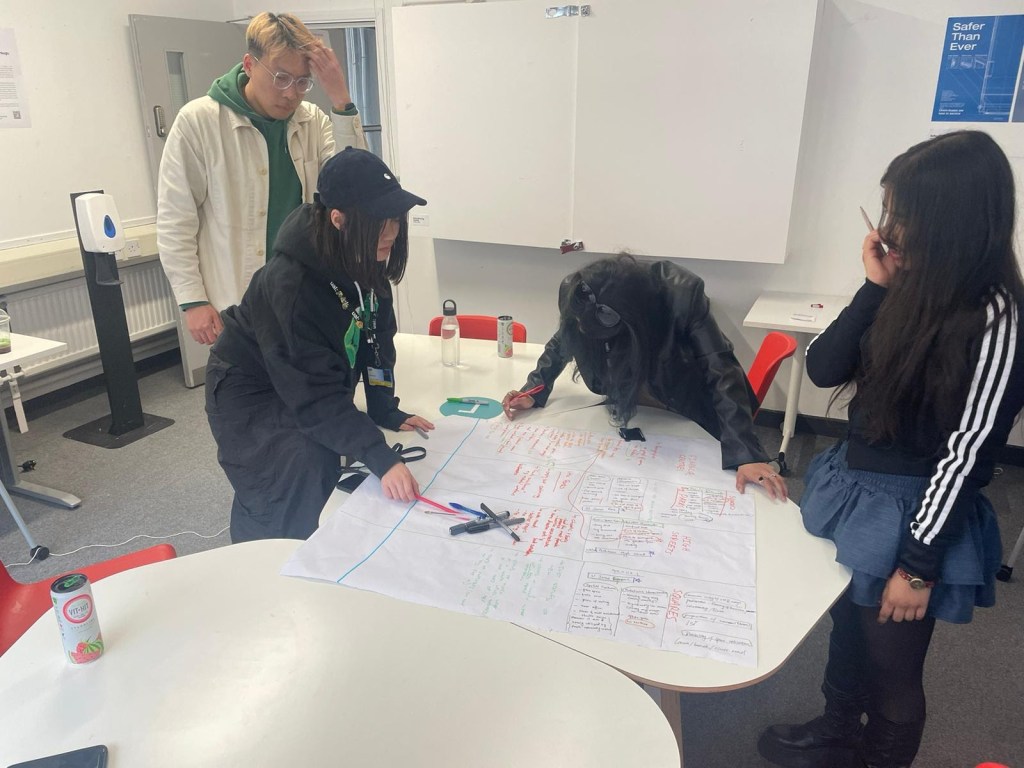
We started by noting our observations from last week and arranging them thematically, in order to discover the themes we were most keen to pursue in workshops. The areas were:
- Safety and security (especially surveillance and perceived risk)
- Accessibility (ensuring that everybody feels welcome in a space)
- Representation (designing a space so it reflects aspects of everybody who uses it)
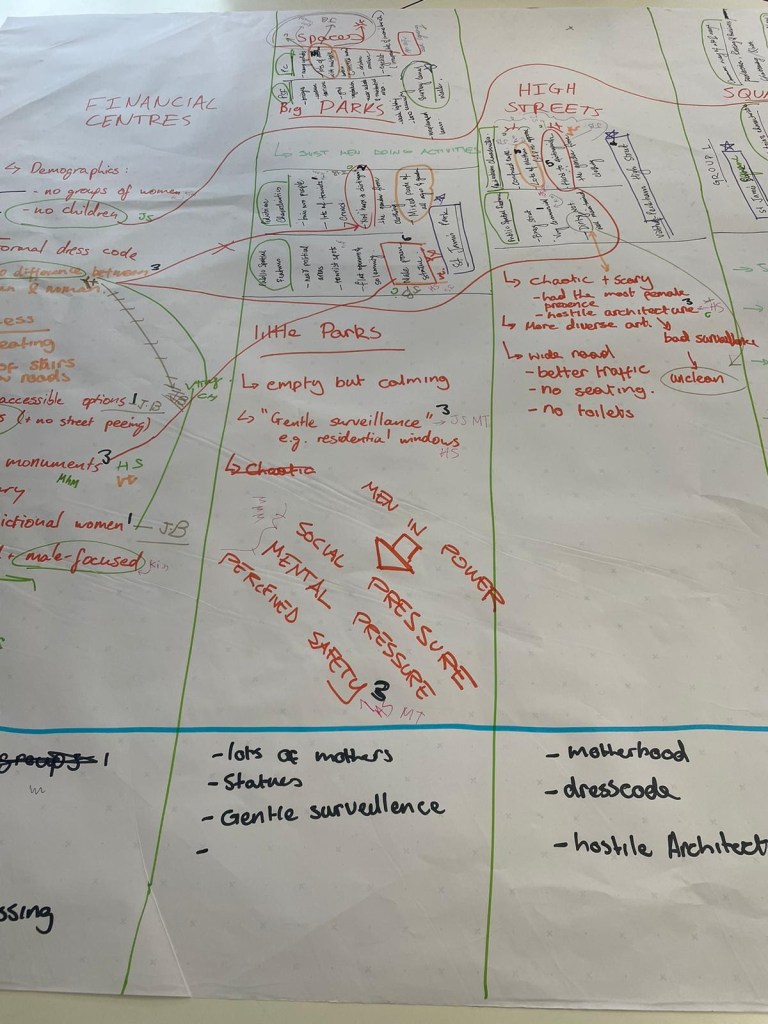

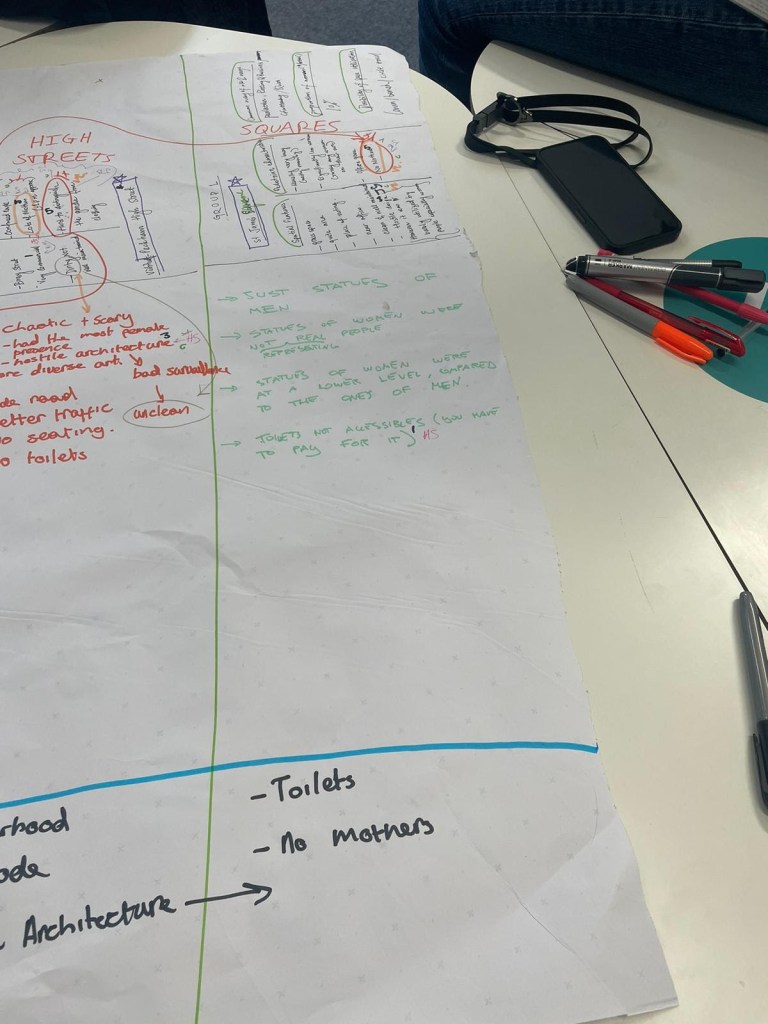
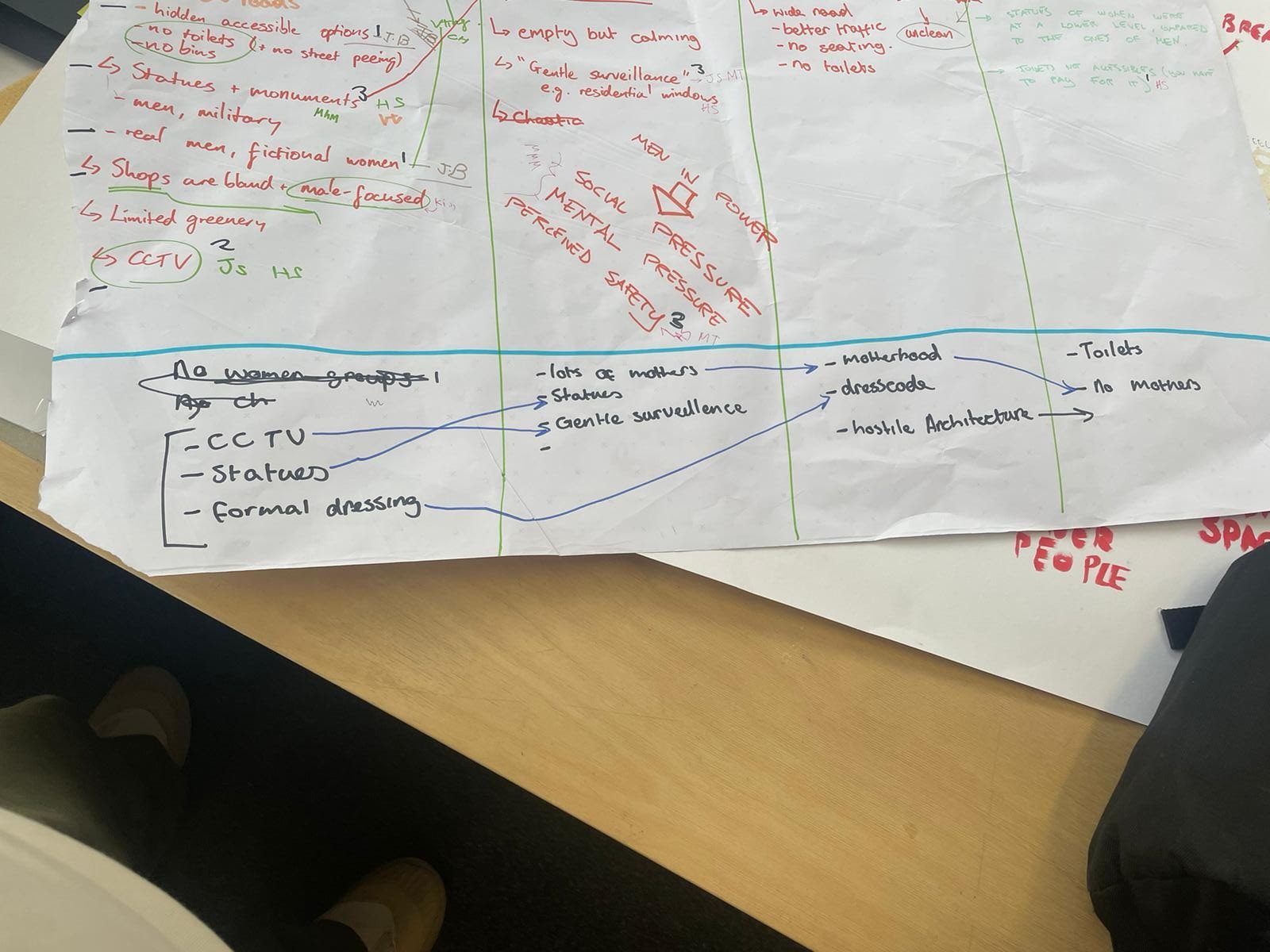
Kim and I started work on the safety and security workshop. We were aiming for two things, chiefly:
- An examination of aspects of people’s local area that positively reinforced safety
- How inequality in perceived risks across genders impacted people’s opinions of their local area
We began by testing the workshop on members of the class, in order to better understand how we could tweak it before putting it before members of the public.
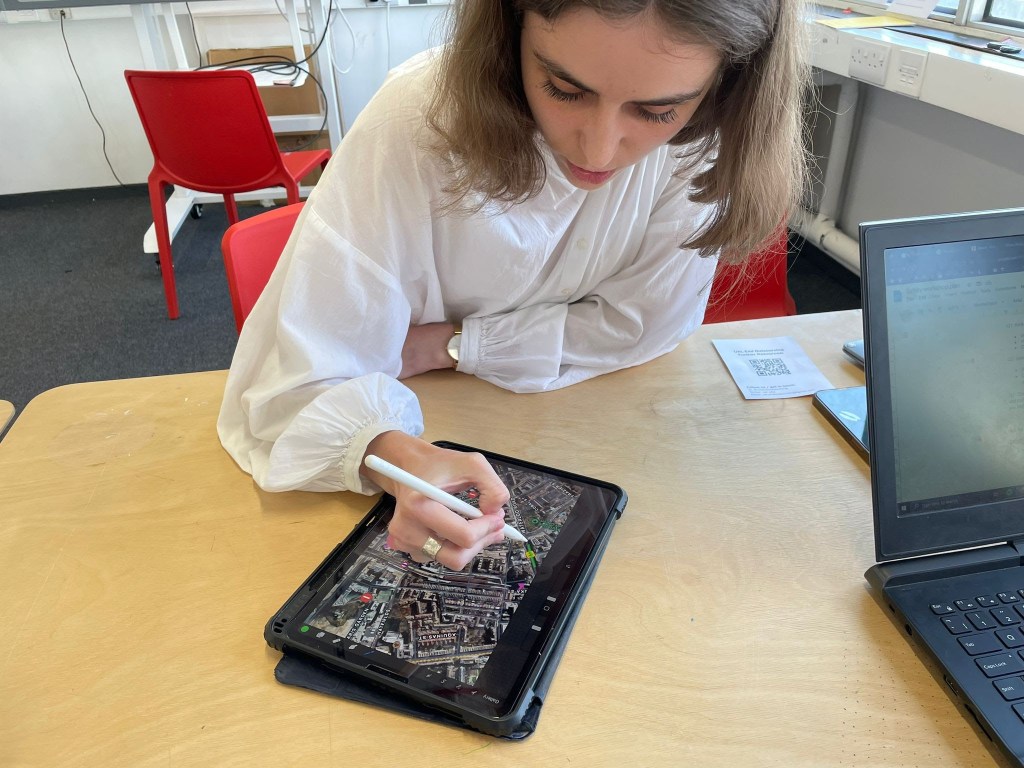

Our workshop took the following form:
- We asked two questions: describe a public place in which you feel particularly safe, and describe the last time you walked home alone at night.
- We then asked the participants to drawn over a map of their local area, illustrating places they think of as particularly safe or unsafe.
From the feedback we received, as well as discussing it in tutorials, we decided the following:
- Focusing on positive aspects is good! Talking repeatedly about danger on the streets is tiring and not as empowering as our project could and should be
- An existing map is an overly restrictive format for expression. Asking participants to draw their own map may provide more interesting insights
Alaistair also pointed us towards workshops in which he had used personal maps – this could be a useful resource for honing our workshop when performed with members of the public.

 Harry Solomons