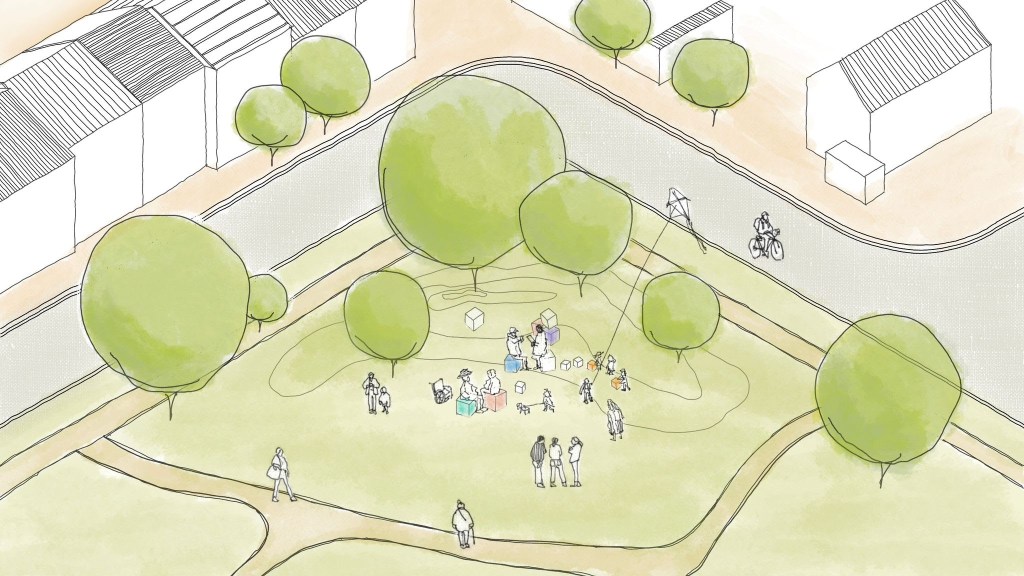
This week was our midpoint presentation, and we spent our time turning our rough ideas from last week into material concepts. Through talking to Glasshouse and through discussions in the group, we decided to go forward with a modular, cube-shaped seating idea and bring it into a real setting.
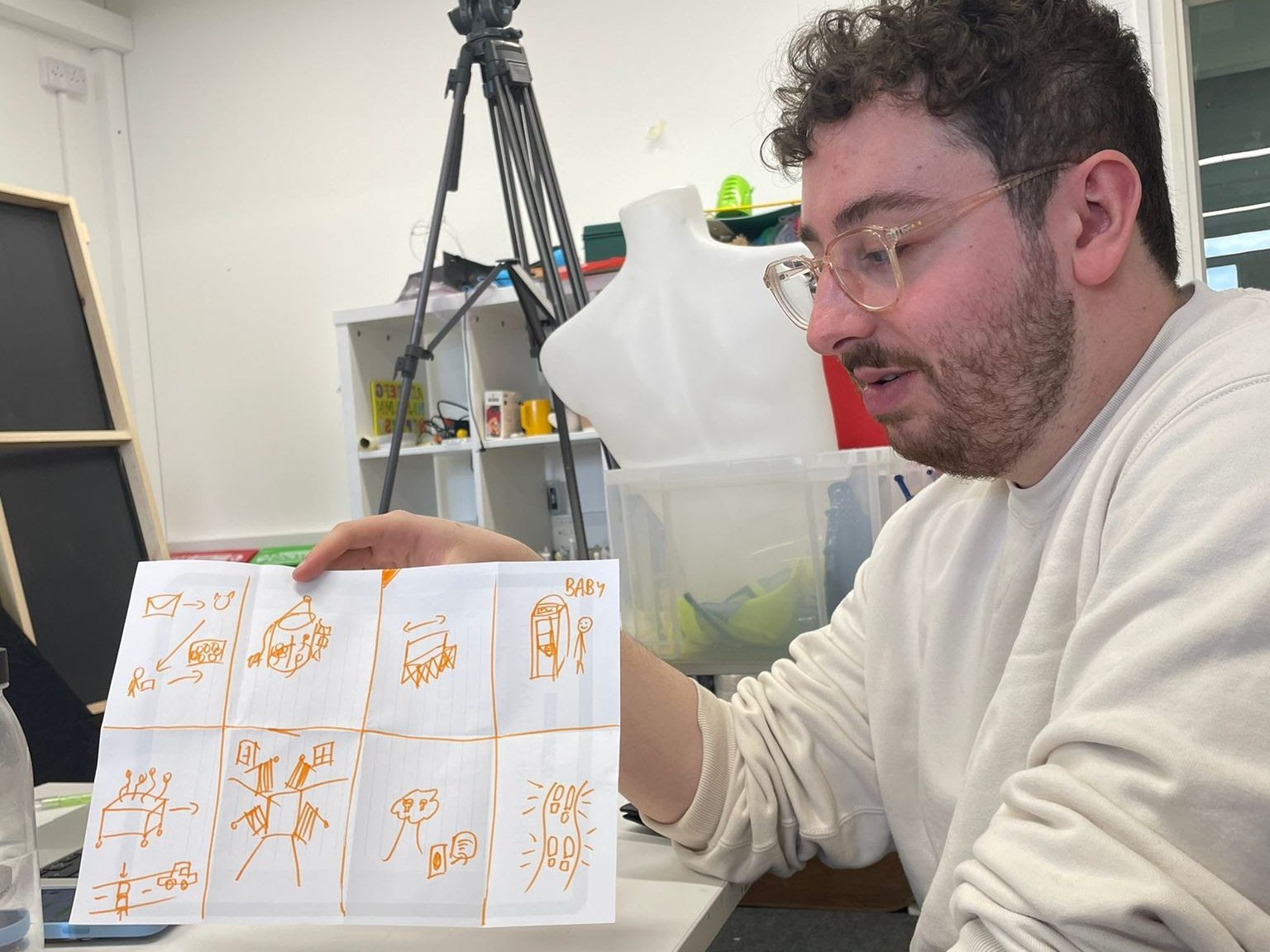
We started by performing crazy 8s in order to give us a better sense of how we could bring the outcomes of our workshops into physical places.
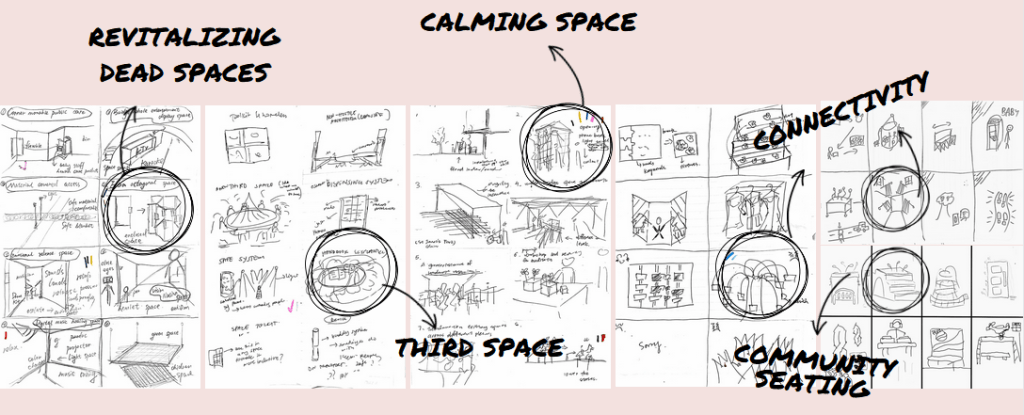
From the overlapping themes, we came up with three ideas that we felt best reflected how they could be brought into real public space. Of particular focus was the idea of a third place – a place separate to work and home in which equal, informal social contact was prioritised. Our ideas were:
- An arrangement of quickly installed public seating with a community-controllable speaker
- Modular walls to create collapsible “rage rooms” and childcare centres
- A phone box converted into relaxation space
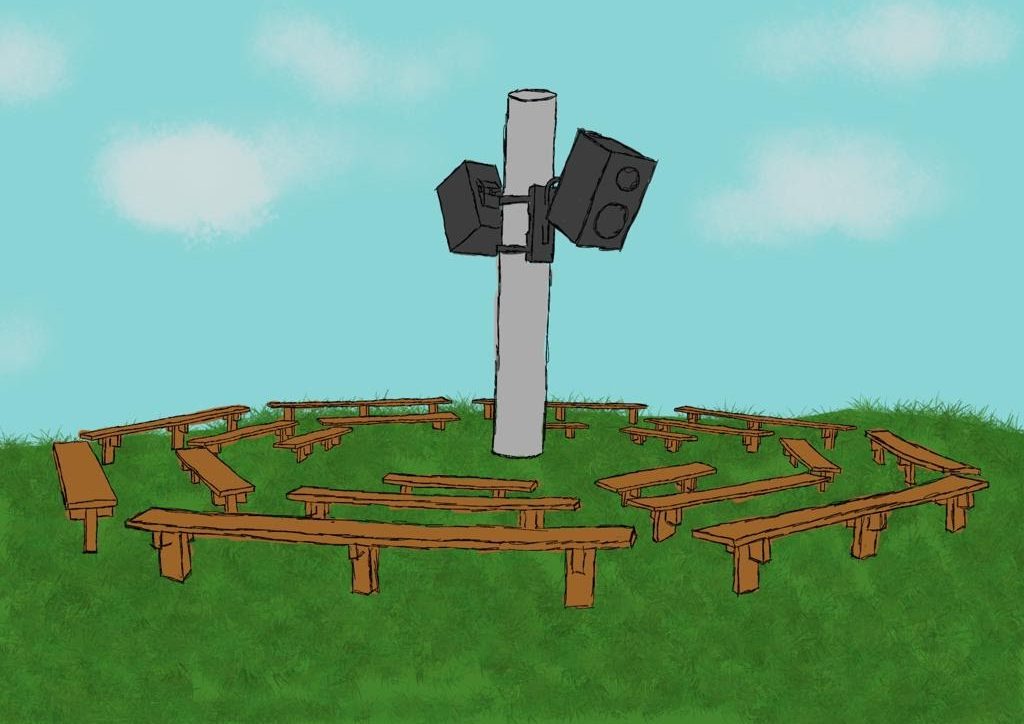


We also arranged a meeting with Glasshouse, in which they advised us to think primarily about the seating idea, as the phone box conversion idea had been repeated several times already, and the modular walls didn’t communicate our ideas as cleanly. Additionally, the idea of urban seating as feminist intervention is something well-established in design practice, such as in the work of Genre et Ville in Paris.
Before our presentation, we made slight changes to our design: the fixed seating was changed to individual cubes that could be moved around, and they would light up and play music, in order to encourage children to play with and manipulate the space.

We quickly built a scale model for the presentation, which came together far faster than I would have expected (largely thanks to Weiting’s ability with the hardware we used), and pieced together placeholder music (key-matched default electronic samples).
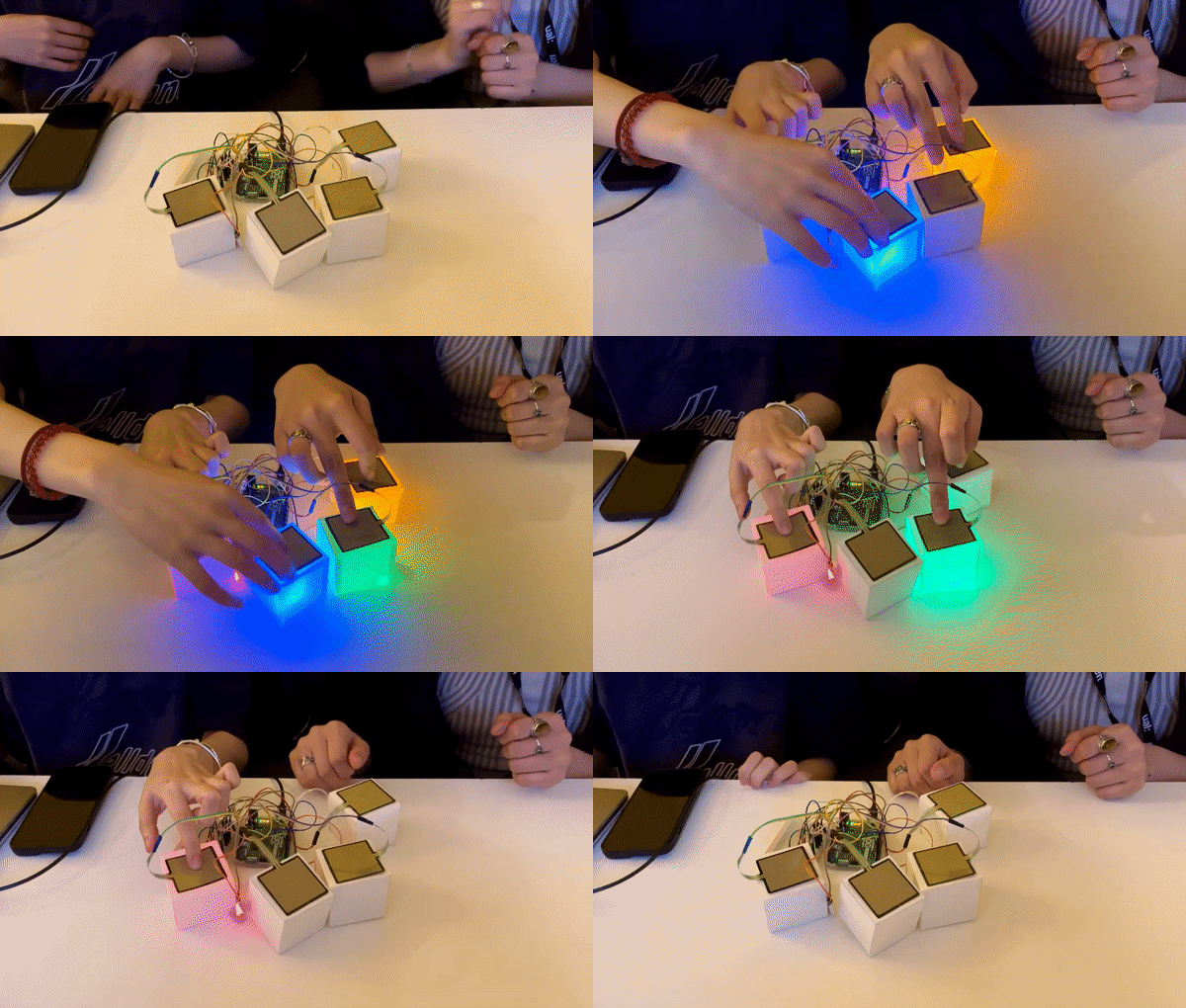
We received the following feedback:
- Many participants really enjoyed the concept, and emphasised how much they liked the idea of a playful intervention
- The objects should be freely distributable – concentrating them in one place could result in them getting “taken over” by groups of men, lessening their impact
- White cubes were a little stilted to serve as an effective intervention – perhaps softer shapes and materials could be more fitting to the purpose
I’m really excited at the enthusiasm with which our project was received. It’s worthwhile to investigate alternative shapes and forms, and so this is something we’ll need to do as a matter of priority, but the cubes could serve as low-fidelity ways to interrogate the validity of our outcome in public tests.
 Harry Solomons