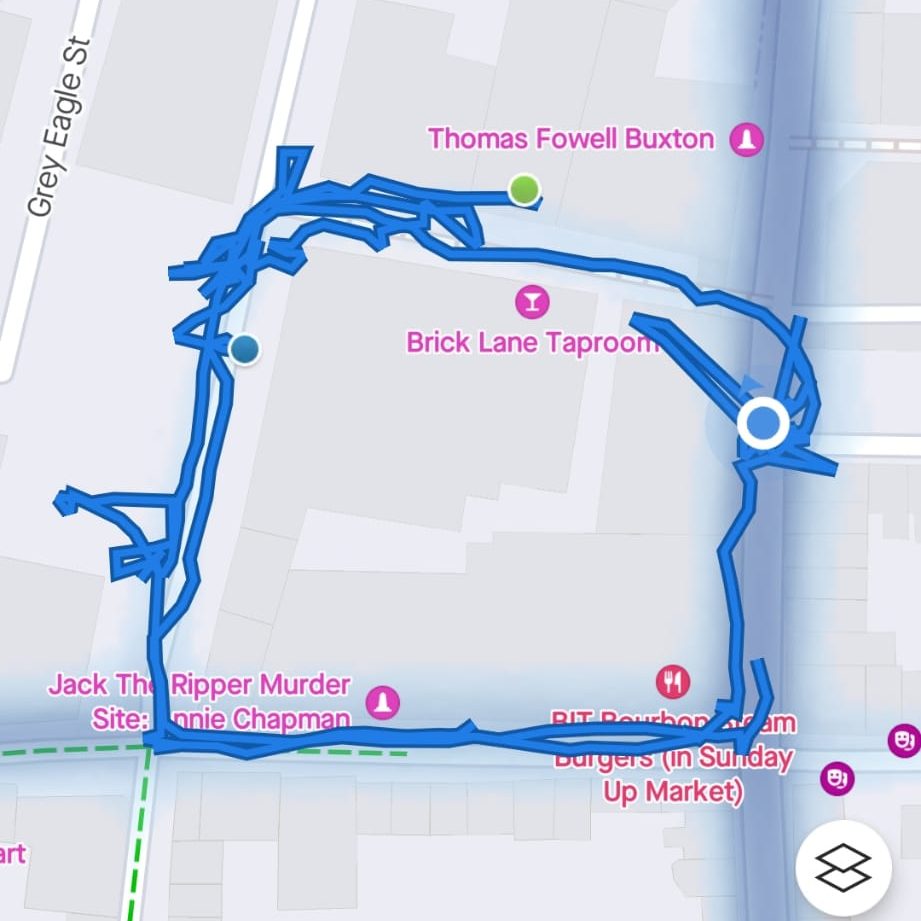
Following recommendations in our industry interviews, we decided to launch a workshop in which people would create their own wayfinding language. Split into two teams, each team would locate 5 landmarks in a given area, and devise their own system, using post-it notes, markers and stickers, for guiding the other team to them. Teams would then swap locations and attempt to find the landmarks. The only guidelines for the system were: a) no text, and b) no arrows. We decided to choose Brick Lane and the Barbican Centre as our two areas, as they presented interesting contrasts: Brick Lane is older, denser, and has developed more organically, whereas the Barbican is newer, more sparsely populated, and represents a more planned environment.
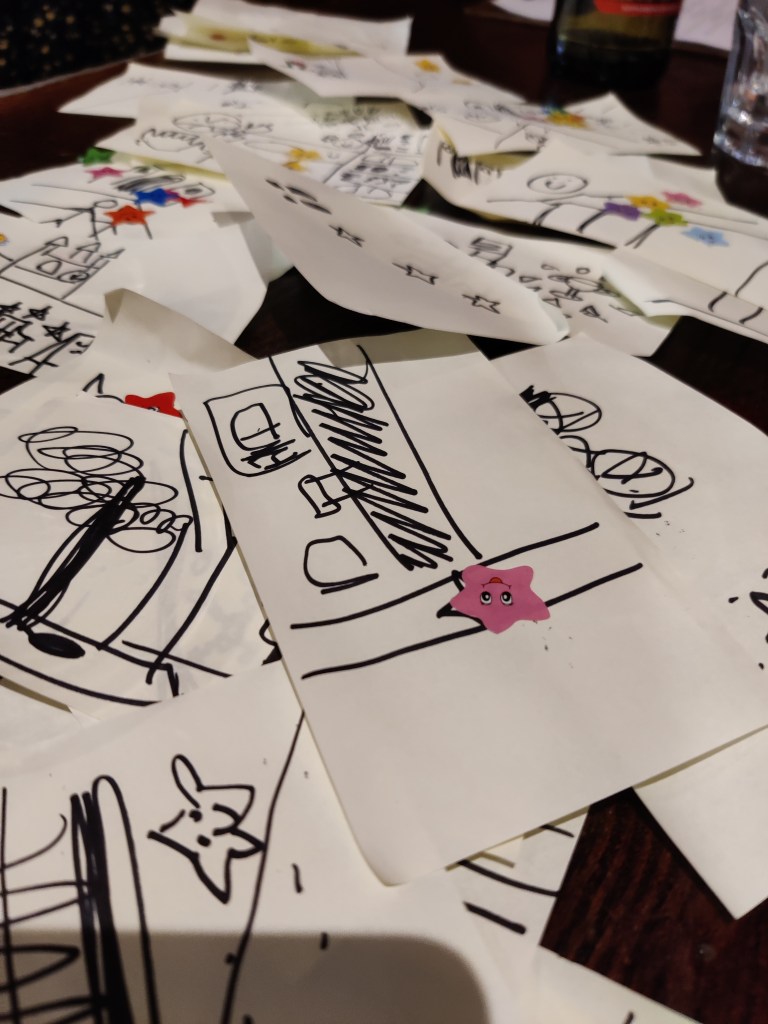
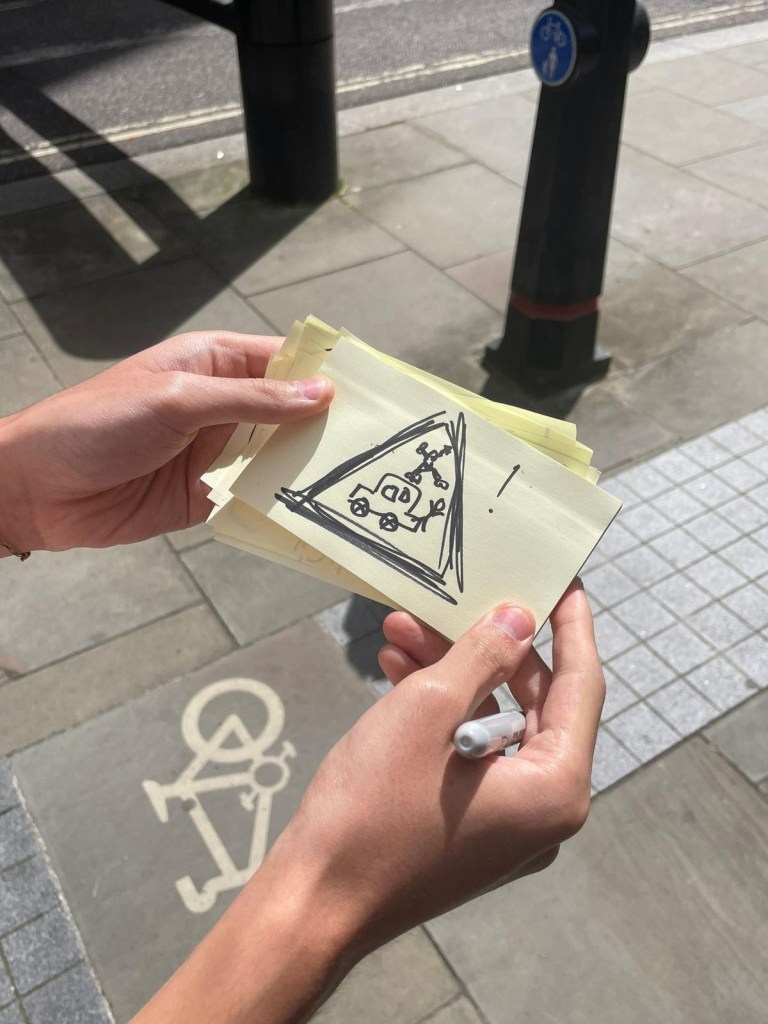
The teams varied heavily in the amount of guidance they provided. While one team laid out extensive maps of the local area, the other team used the stickers provided as ‘breadcrumbs’ to follow a pre-defined route, which proved largely difficult to follow.

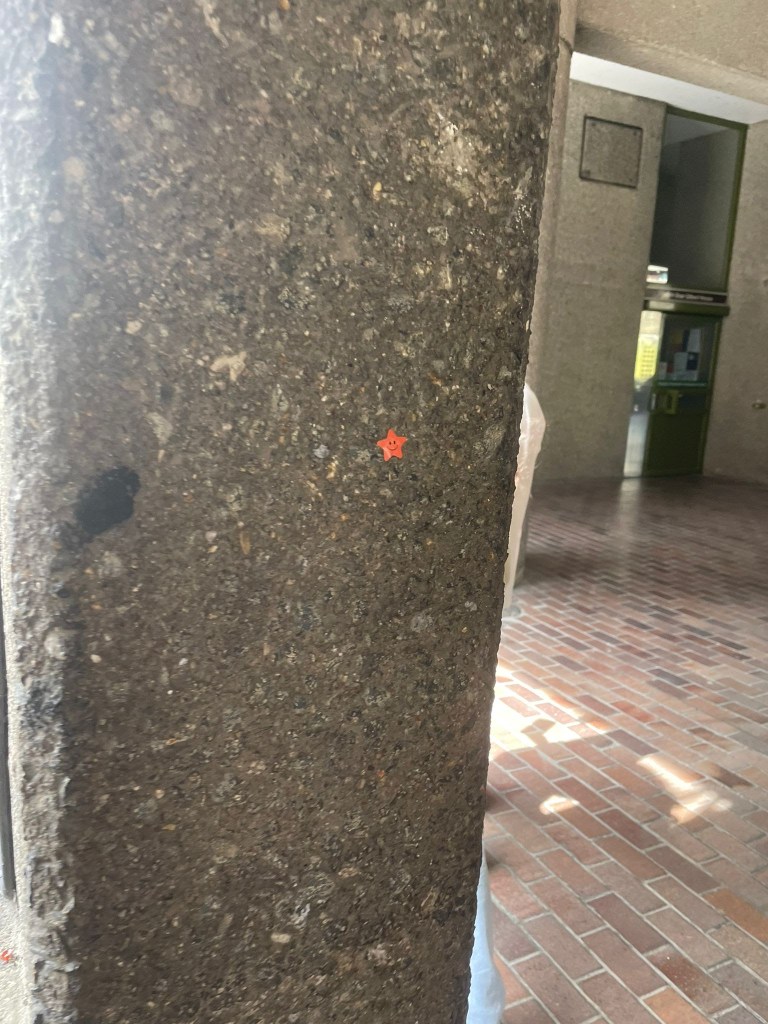
A few similarities emerged in the teams’ approaches:
- ‘Hot and cold’ signposting to indicate direction, often colour-coded;
- Visual representations of immediate landmarks;
- Collectible hints along the route to reassure teams they were going the right way.

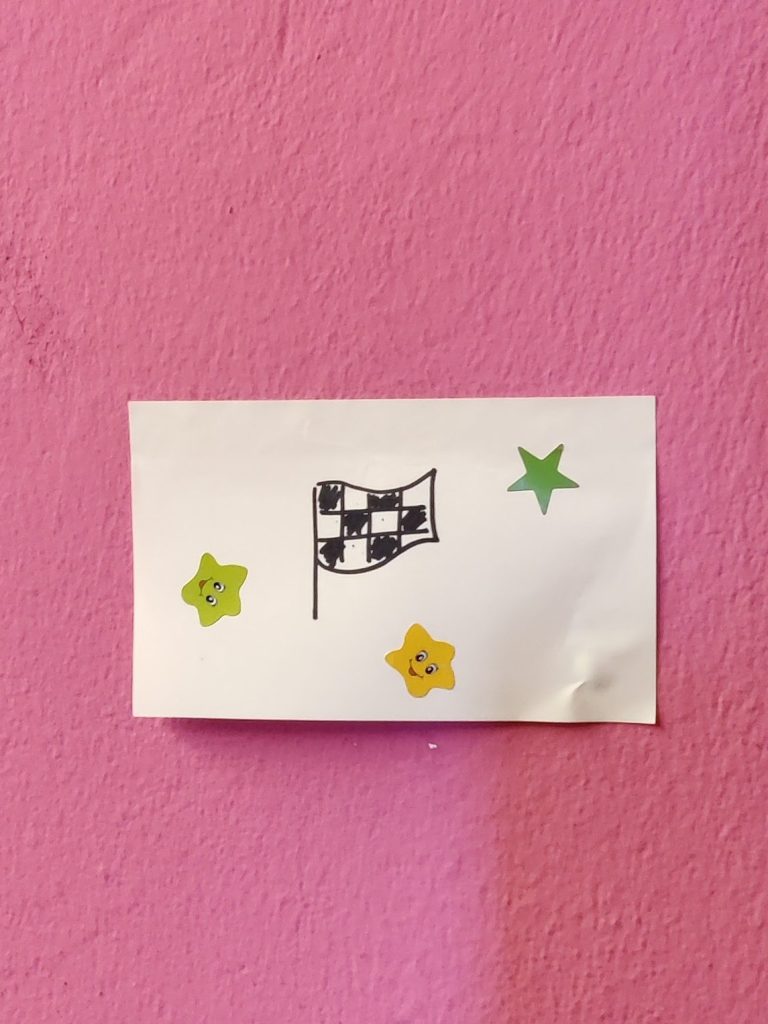
In a post-workshop interview, the teams remarked that the collectible breadcrumb strategy was the most effective. While one team was somewhat frustrated that they had been provided with little guidance, they acknowledged the difficulty in spotting the hints in the comparably visually ‘busy’ environment of Brick Lane, where stickers and wall art are significantly more abundant. They introduced an interesting concept, which was to consider the difference between route-based wayfinding and location-based wayfinding, and to think about which would be more resonant in an urban setting, particularly if we are aiming to replace GPS tools.
If repeating the workshop, we would make several changes:
- Limiting the materials provided to groups, in order to try and discourage them from taking the most literal possible approach;
- Using exclusively busier environments, as this inspired the group to come up with more interesting solutions rather than a simple area map.
However, the route/location argument could prove to be very interesting for the development of our project, as well as the general guidance provided as to which systems worked and did not, and therefore this workshop proved to be a useful step in our research process.
 Harry Solomons