This week focused around two main topics: an artefact analysis of a second-hand compass, and facing the question of how we will gather content for the stories we are directing users between. The artefact analysis yielded useful insight as to the importance of ergonomics in our device, as well as balancing analog and digital functionalities; as for gathering content, we will have to make sure we reach out to as many disparate groups as possible in order to prevent selection bias from skewing the content we produce.
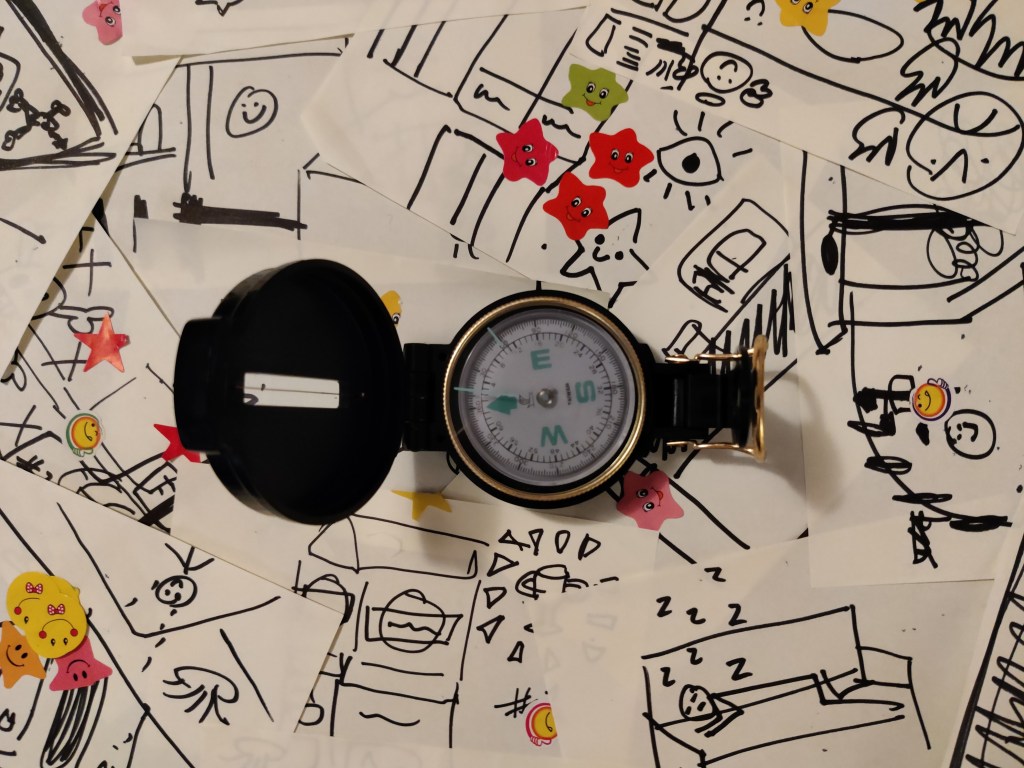
Now that we are fixed on the form of a compass for our physical outcome, it is important to understand the full aesthetic implications of the form, and so an artefact analysis is important. We used a small pocket compass that we had ordered from eBay as our source here.
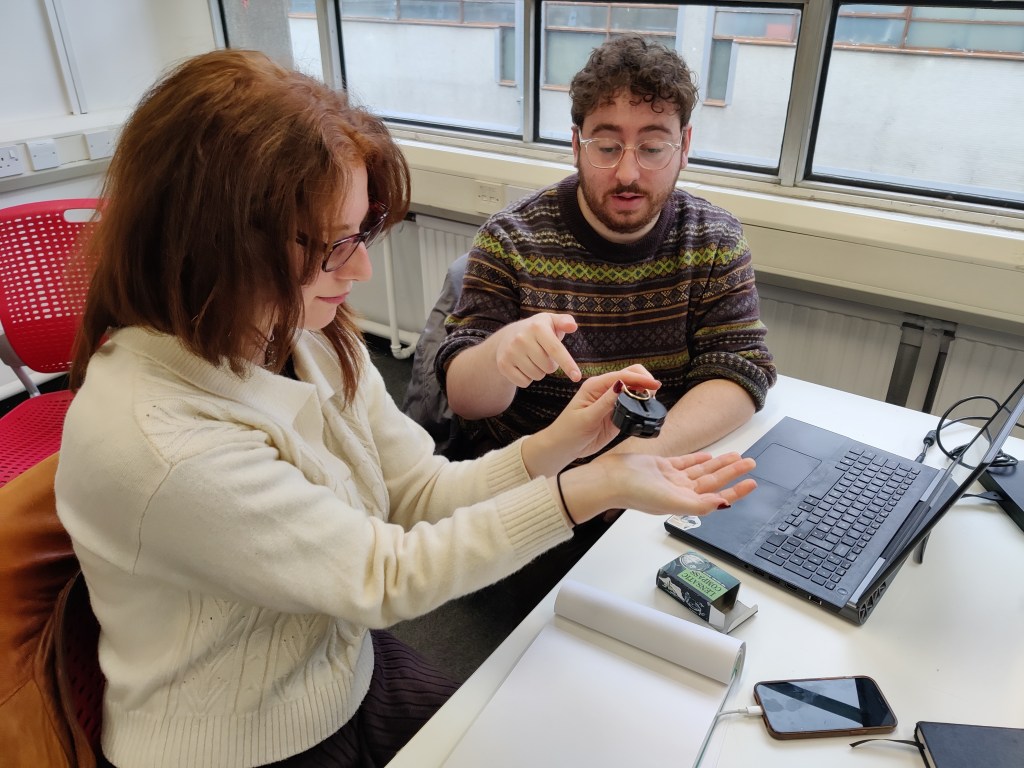
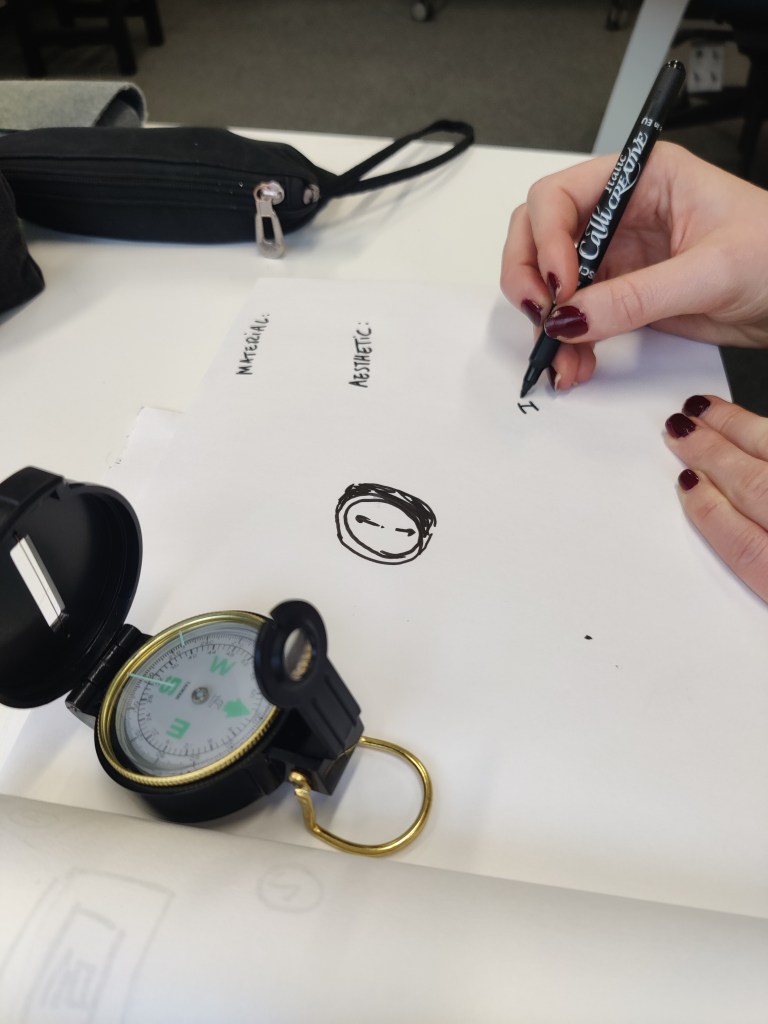
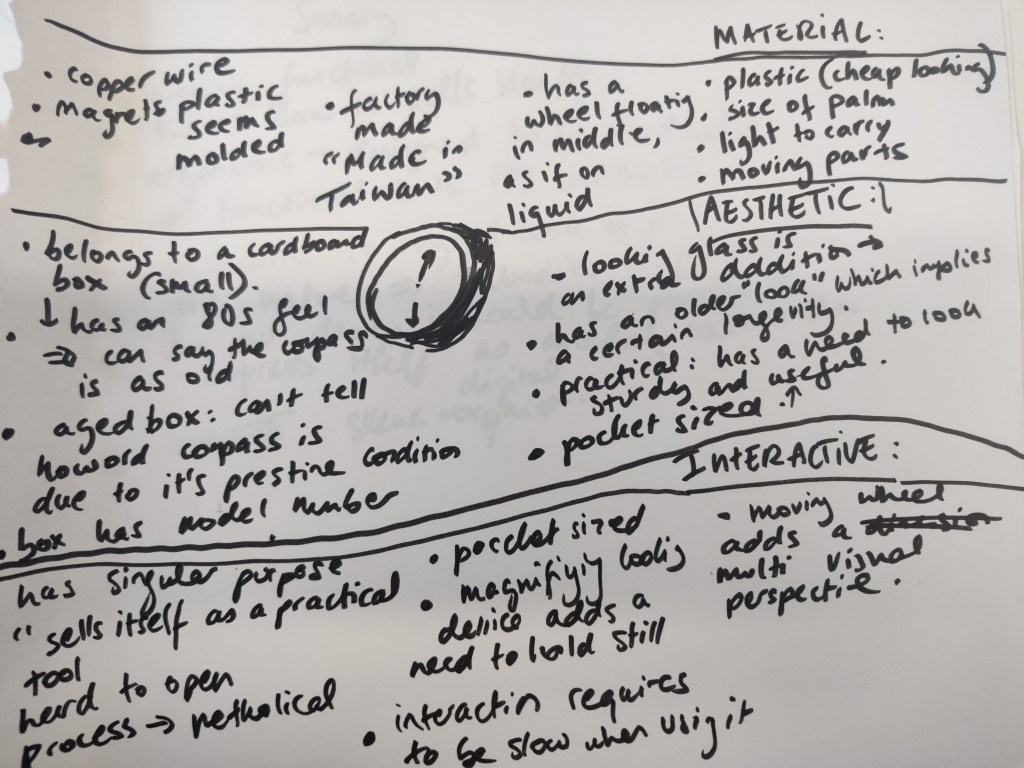
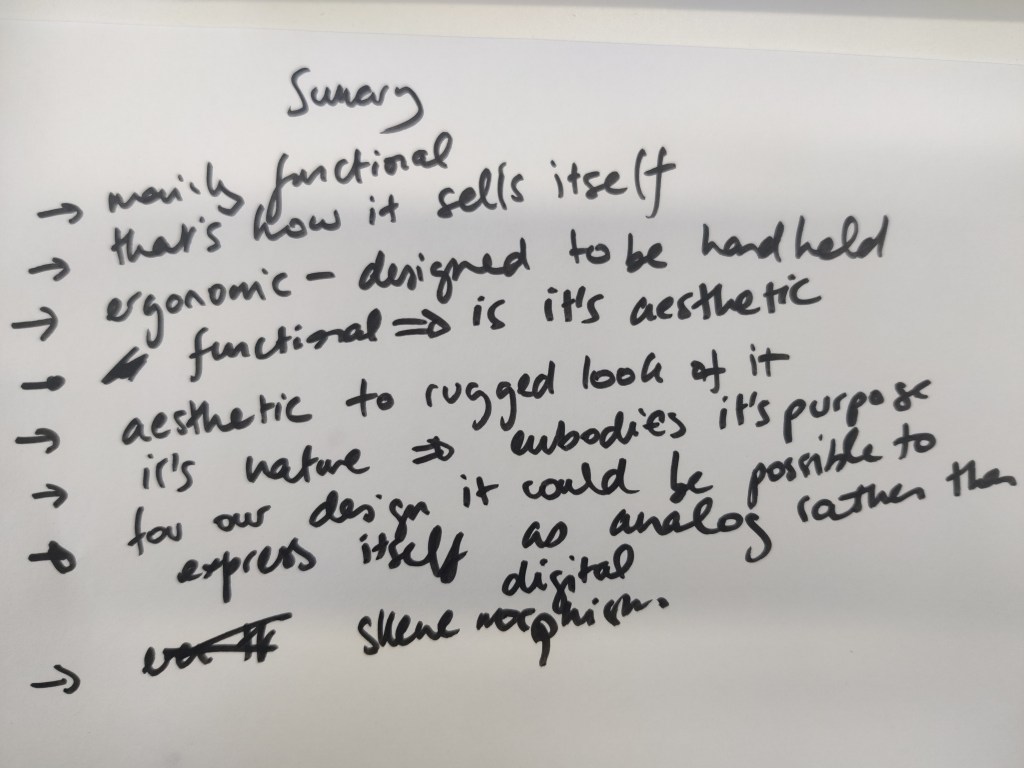
Our main takeaways were the following:
- There’s something very pleasingly analog about a compass, and how it reacts to very slight movement – even in a digital implementation, we should try and preserve this sensation
- A compass is sold and promoted as “function over form” – if we are to disrupt this in our outcome, it should be done consciously
- The ergonomics of the device are crucial. It should be able to be held in one hand, because it makes it much easier to turn and follow – this might be challenging, depending on the technology we use
Gathering Content
We identified this week that gathering content for the project will be a real challenge. If we want to populate real places, we will need real stories from real people. To this end, we’ve been studying the theory around oral history, particularly the work of Alessandro Portelli and how he claims preserving the subjective ‘truth’ in oral history is incredibly important.
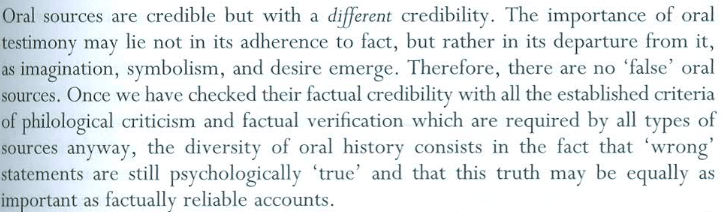
Our first subject was a friend of my dad’s, a journalist called John who has lived in London since 1988. John was not willing to be recorded in any way, nor for his voice to be used in the project, but gave consent for transcripts of his stories to be read by actors as part of our final outcome. This is an imperfect approach – as Portelli makes clear, something is lost in the process of transcription – but is far better than working from invented stories.
Most of the places John mentioned were linked to food or drink (e.g. F Cooke Pie and Mash in Dalston, or the Coach and Horses in Soho). While these are interesting, we became slightly worried that this would become an overly significant part of our project, and so we may have to reshape our questions going forward. We became particularly attached to stories of places in flux, or that have vanished, and so we will rephrase our interviews in order to encourage this.
We are trying to snowball contacts through John, and have emailed several people that he pointed us towards. However, we are very conscious that remaining in these networks will cause us to self-select for a specific type and definition of ‘local’ – namely, middle-aged, white and male. We do not want to give this impression, and so we must consider alternate points of contact to reach out to.
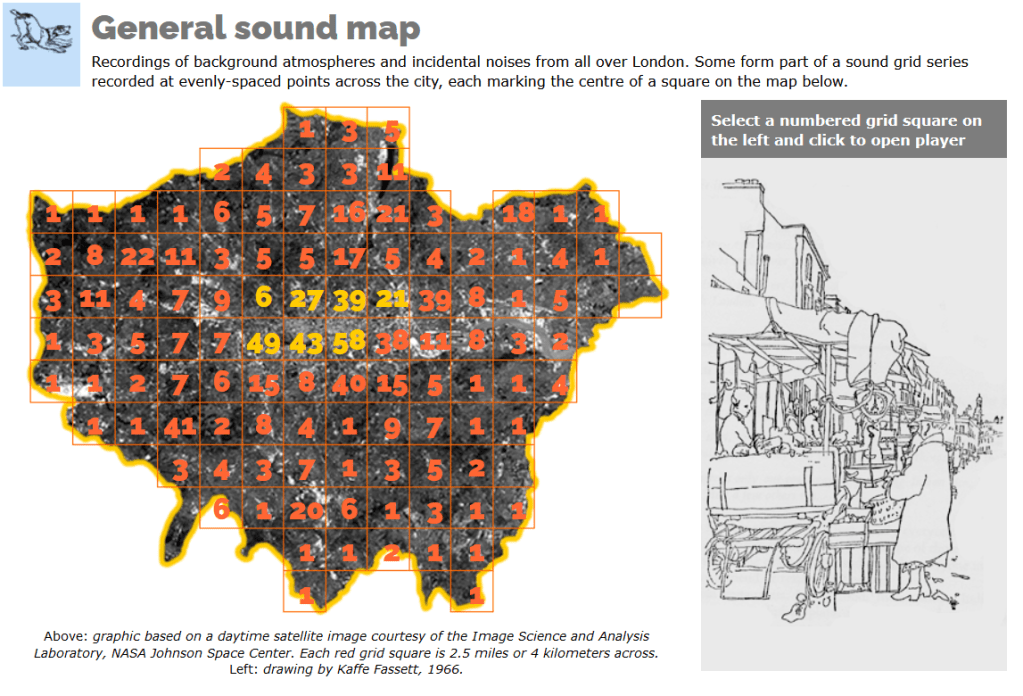
We have also grown more confident in the idea of soundscapes in our work, and have begun looking at resources for accumulating archival sound. The London Sound Survey may be incredibly useful here – a resource of CC-licensed archival sound, organised by region of London, that dates back as far as the 1920s in some cases. We have already begun collecting sounds that are particularly interesting to us.
 Harry Solomons