This week, we focused on the on-the-ground research missing from our presentation last week. We started by performing several AEIOU observations on London buses – mine was taken on the 135 from Shoreditch to Limehouse on a Saturday evening.
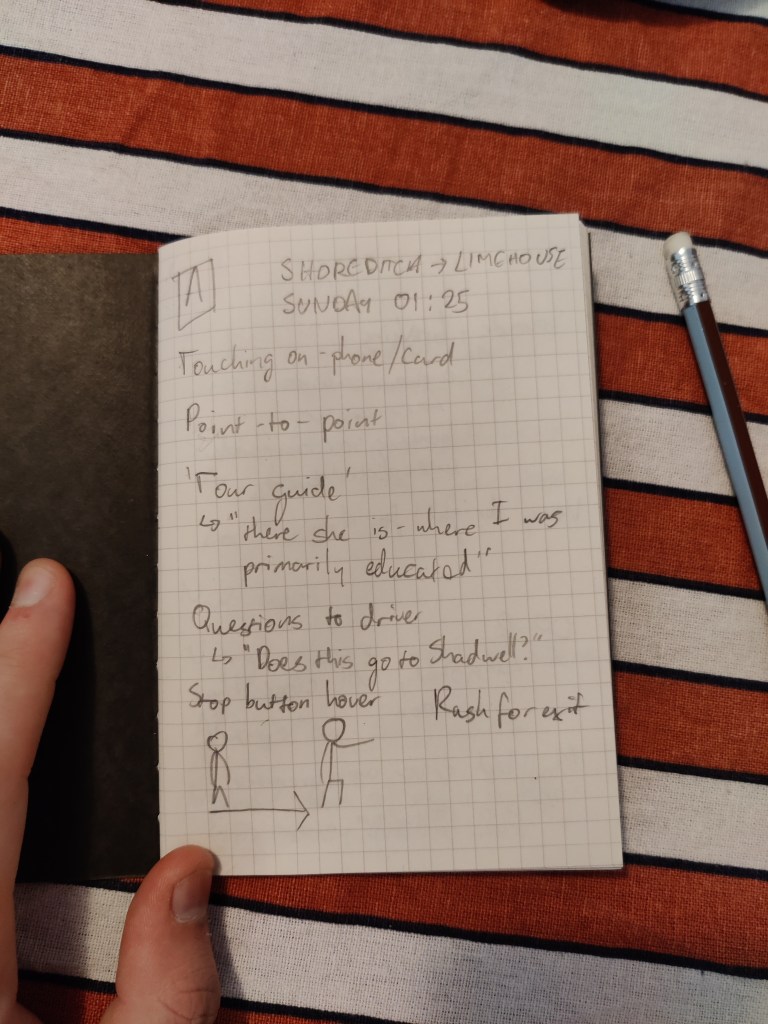
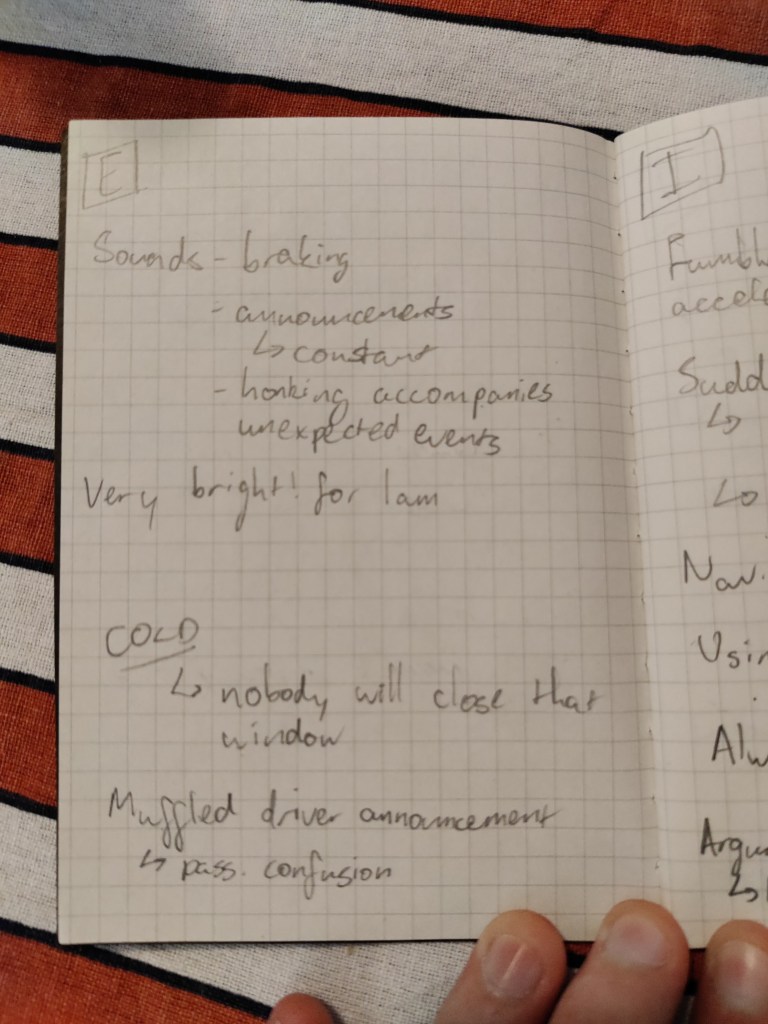
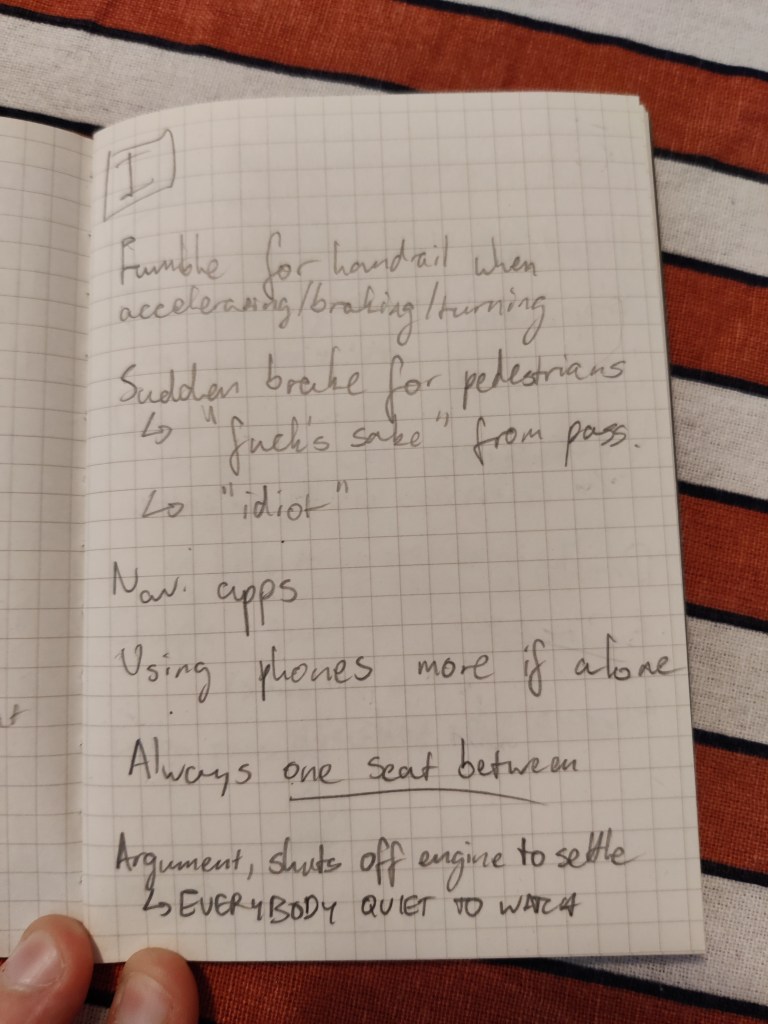
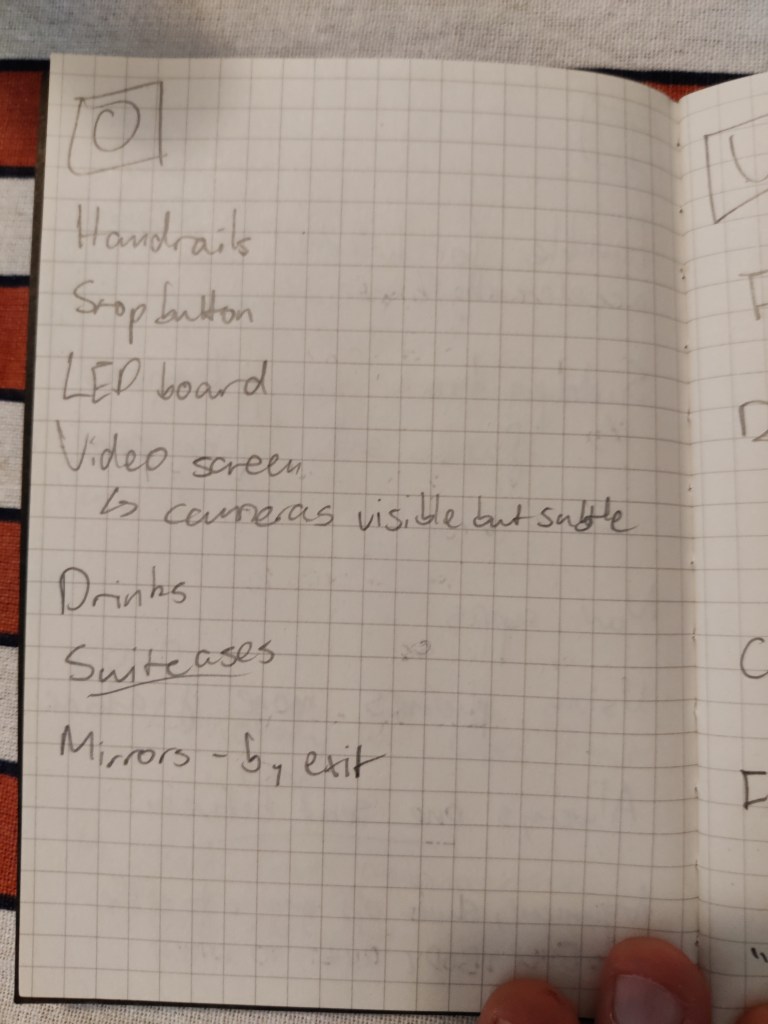
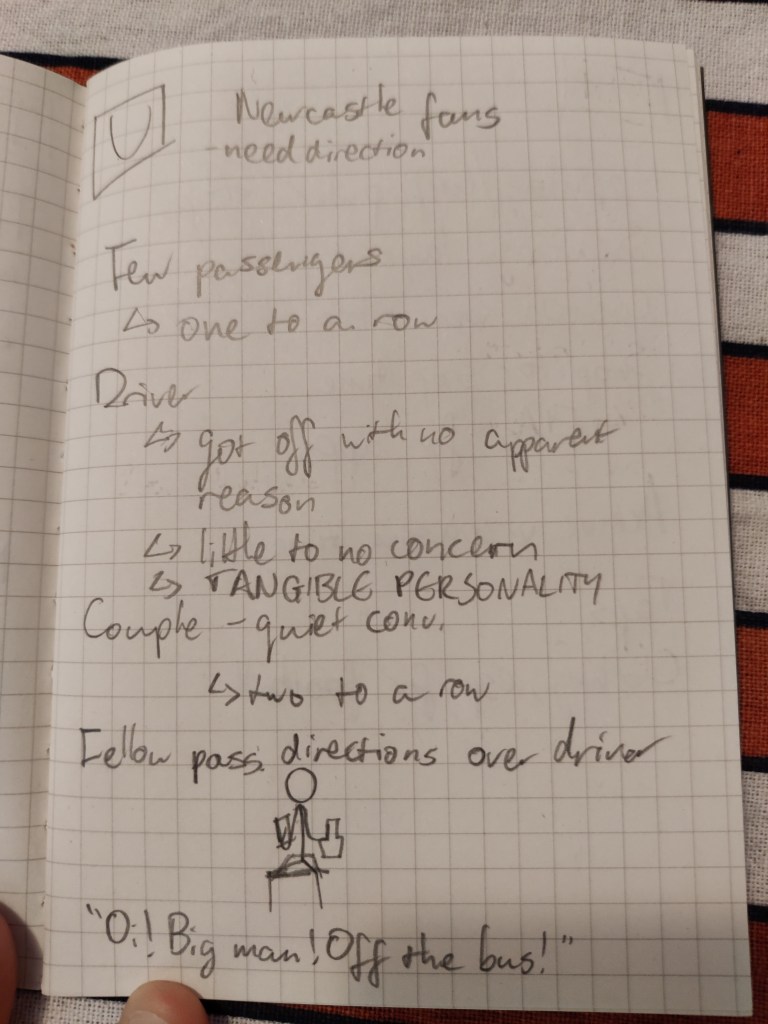
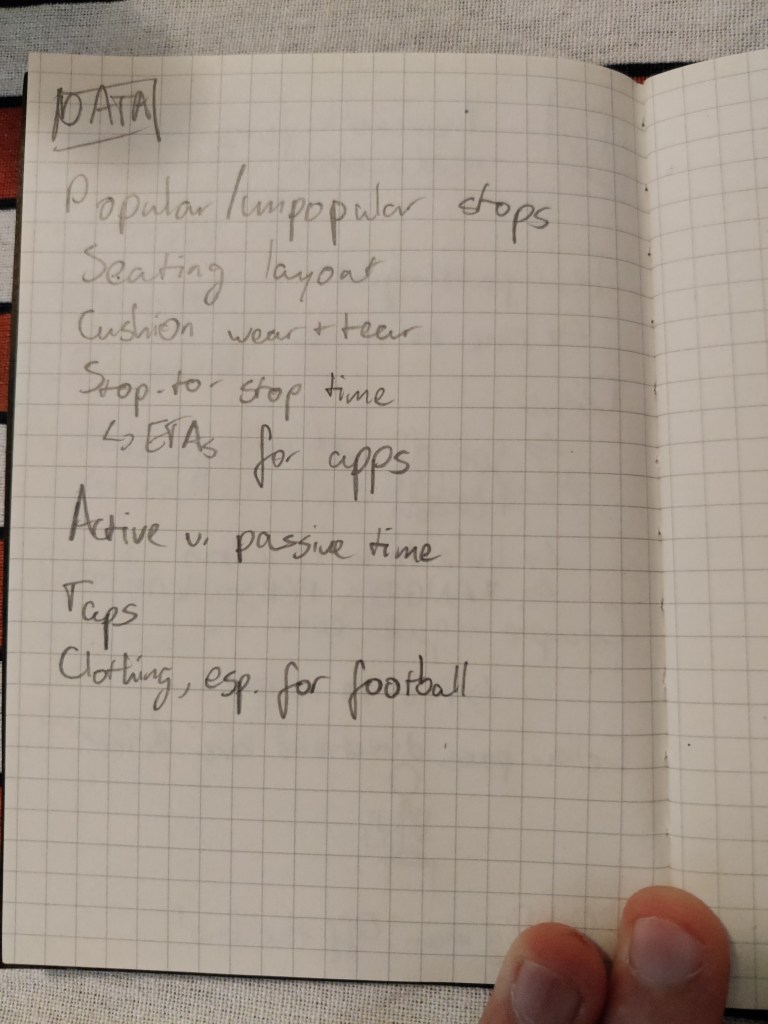
When analysing our observations, we realised how much was being lost by removing a driver from the equation, and that human drivers provide much more support than just driving the bus. To elaborate on this, we conducted several focus groups, both with students and non-students.
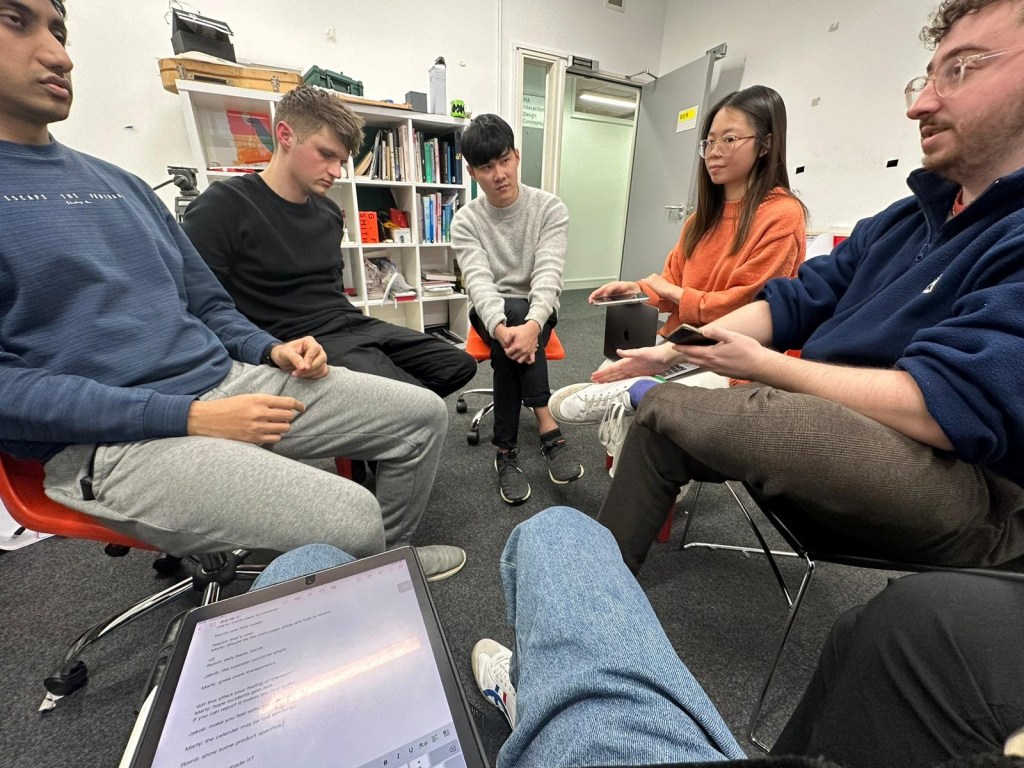
Our first group was with fellow members of the MA:UX cohort, who had already seen our outcomes in last week’s presentation. We asked for specific feedback on the prototypes, and ways in which they met or did not meet our goals of communicating AI risks. The following feedback emerged:
- The ADB was difficult to trust, and seemed, for lack of a better word, ‘evil’
- The risk of ‘lack of accountability’ was difficult to generate much strong emotion about
- The app generated a lot of feedback, but almost all of it focused around its functionality
- The AI risk component was still not coming across
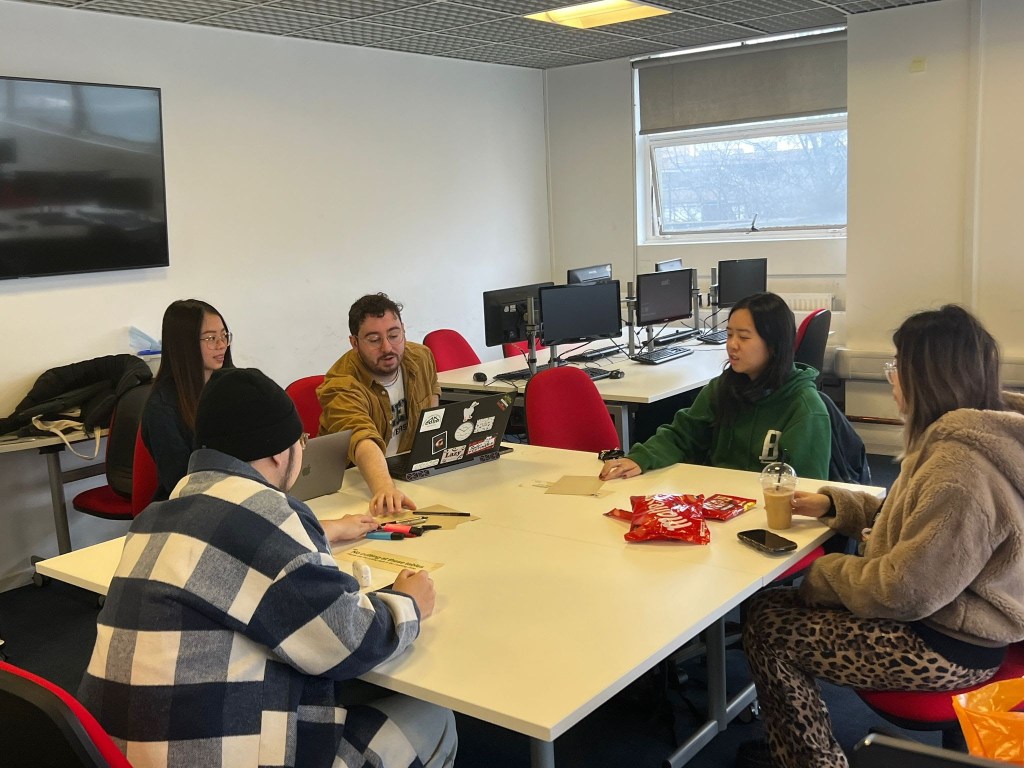
Our second focus group was with various participants who had not seen our outcomes, and we instead asked them to envisage and document the process of taking a complete journey on an autonomous bus. We then addressed the perceived risks of such a journey.
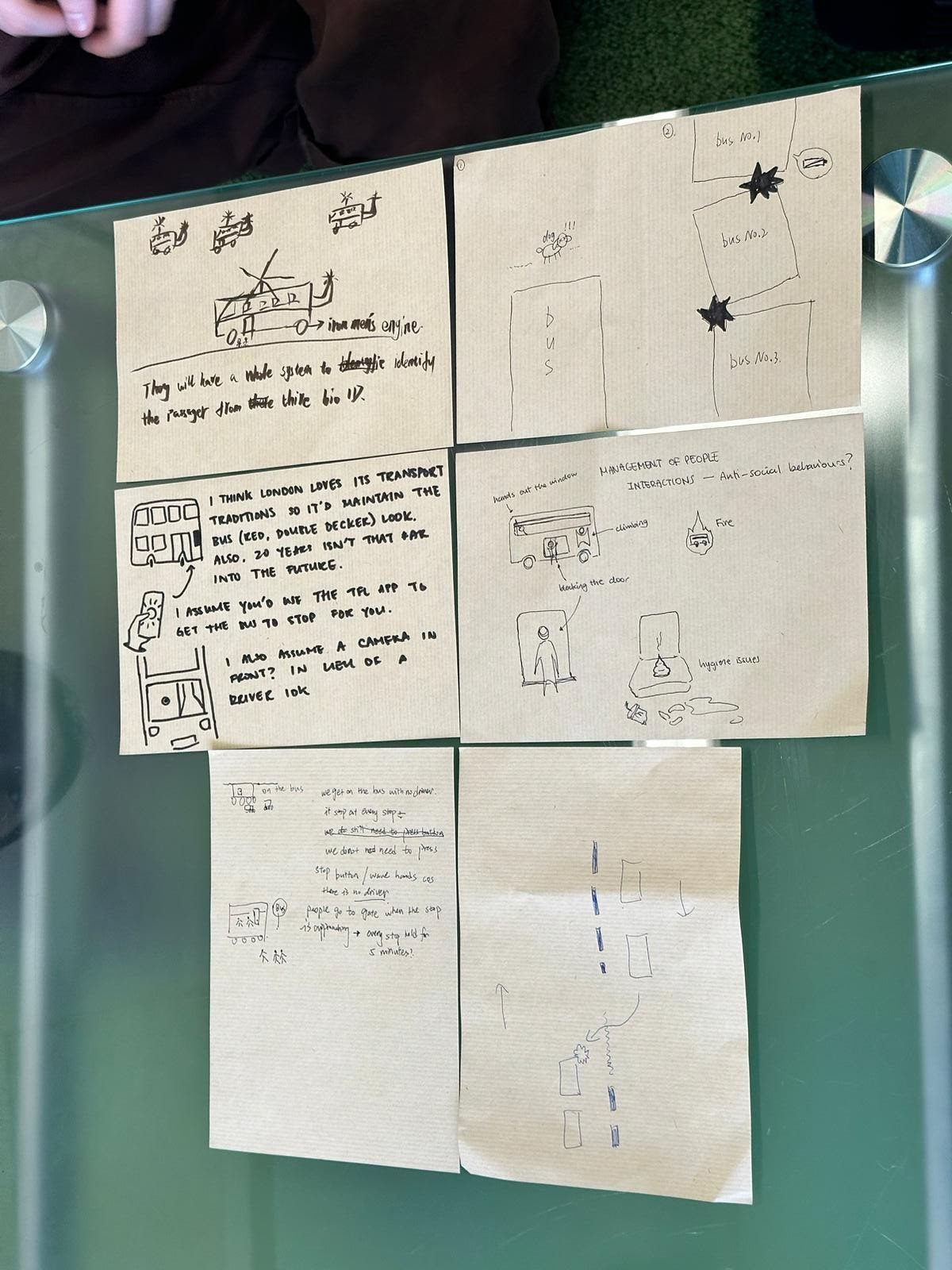
Several key topics emerged:
- Safety within the bus was as important as on-the-road safety, and the risk of this seemed higher without a driver
- The participants would find it very difficult to trust the safety of this system in the first few years of its introduction
- There was a difficult to identify ‘gut feeling’ to a driver that assured safety in a way no AI system would be able to
These gave us ideas to look at more human approaches to replace a driver, perhaps de-prioritising our digital solutions in our final outcome. We began to consider how an overarching ecosystem, encompassing the app as a small part, rather than its key feature, could be communicated. We thought that perhaps we could present our final outcome almost archaeologically – an artifact-led exhibit from which our audience could piece a world together in their minds. Our plan for next week is to focus on developing and building these artifacts.
 Harry Solomons